Die allgemeine | Auferſtehung deren Todten | mit dem darauf erfolgenden | Lezten Gericht | In einer Oratoriſchen Trauer-Musique | entworffen, und an eben den Tag producirt, | als die Chriſt=Catholiſche Kirch | ihren Glaubigen | Die Glorrreiche Urſtand | JESU CHRISTI | vorzuſtellen pfleget | Abgeſungen von einer Hochfuerſtl. Eſz- | terhazyſchen Hof-Capellen, Bey dem Heil: | Grab der hochadelichen Regulirten | Chorfrauen zu St Joseph. | Zu Eißenſtadt den 16 Aprilis Anno 1745. | Durch | Gregorium Joſephum Werner. | Hochfuerſtl: Capell=Meiſtern.
A Oratorios
Click on an incipit to see an incipit comprising all instruments and voices.
A.1
Fasciculus Myrhae Dilectus
(no incipit available)
| Identifiers | HarCa I.A.1 |
| ARK | ark:68748/gw1a1 |
| Sources | A-KN D-I-614a-03 · A-Wgm III 17705 (H 28239) |
| Notes | |
| References | Farkas (1994), Hárich (1976), Pernerstorfer (2020), Perutková (2022), Tank (1981, p. 215), Warner (1965) |
| Inventories | |
| Editions |
A.2
Schmerzhafter Wiederhall
(no incipit available)
| Identifiers | HarCa I.A.2 |
| ARK | ark:68748/gw1a2 |
| Sources | A-Wgm III 17708 (H 28242) |
| Notes | |
| References | Farkas (1994), Hárich (1976), Tank (1981, p. 216), Warner (1965) |
| Inventories | |
| Editions |
A.3
Tochter Zion
(no incipit available)
| Identifiers | HarCa I.A.3 |
| ARK | ark:68748/gw1a3 |
| Sources | A-Wgm III 17706 (H 28240) |
| Notes | |
| References | Farkas (1994), Hárich (1976), Tank (1981, p. 216f), Warner (1965) |
| Inventories | |
| Editions |
A.4
Mater dolorum
(no incipit available)
| Identifiers | HarCa I.A.4 |
| ARK | ark:68748/gw1a4 |
| Sources | A-Wgm III 17709 (H 28243) · A-Wn F100.Moder.155 · A-Wn F100.Moder.71 · A-Z (no shelfmark) · H-Bn (no shelfmark) |
| Notes | textbooks in A-Z and H-Bn currently (2025-04) undiscoverable |
| References | Farkas (1994), Hárich (1976), Page (2024), Tank (1981, p. 217f), Warner (1965) |
| Inventories | |
| Editions |
A.5
Der gute Hirt

| Identifiers | HarBu 1.1 · HarCa I.A.5 |
| ARK | ark:68748/gw1a5 |
| Sources | H-Bn Ms.mus III.1 |
| Notes | |
| References | Farkas (1994), Hárich (1976), Schlader (2019), Schlader (2020), Tank (1981, p. 303) |
| Inventories | Sauer (1809, fol. 13v, no. 521) |
| Editions | Vécsey (1968a, pp. 34–50) |
A.6
Judith

| Identifiers | HarBu 1.2 · HarCa I.A.6 |
| ARK | ark:68748/gw1a6 |
| Sources | H-Bn Ms.mus III.2 |
| Notes | |
| References | Farkas (1994), Hárich (1976), Somfai (1963-1964), Tank (1981, p. 304) |
| Inventories | Sauer (1809, fol. 13v, no. 529) |
| Editions |
A.7
Absolon

| Identifiers | HarBu 1.3 · HarCa I.A.7 |
| ARK | ark:68748/gw1a7 |
| Sources | H-Bn Ms.mus III.3 · A-Z (no shelfmark) |
| Notes | textbook in A-Z currently (2025-04) undiscoverable |
| References | Farkas (1994), Hárich (1976), Tank (1981, p. 217f), Warner (1965) |
| Inventories | Sauer (1809, fol. 13v, no. 530) |
| Editions |
A.8
Joseph
(no incipit available)
| Identifiers | HarCa I.A.8 |
| ARK | ark:68748/gw1a8 |
| Sources | A-Wgm III 17702 (H 28236) |
| Notes | |
| References | Farkas (1994), Hárich (1976), Tank (1981, p. 305), Warner (1965) |
| Inventories | |
| Editions |
A.9
Die Auferstehung
Die allgemeine Auferſtehung deren Todten mit dem darauf erfolgenden Lezten Gericht
| 1 | 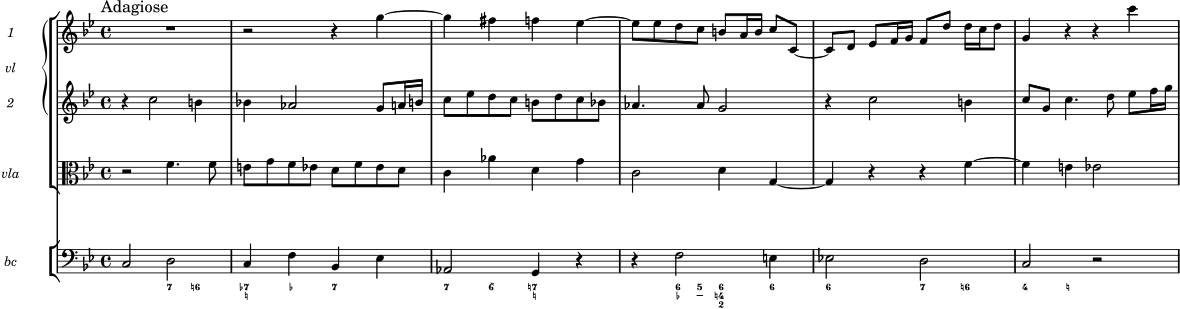 |
| 2 |  |
| 3 | 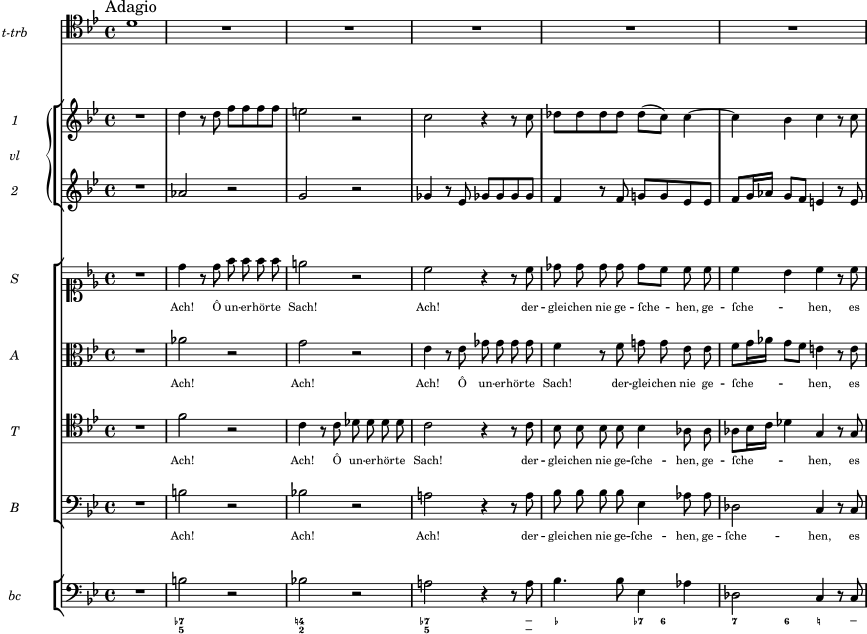 |
| 4 | 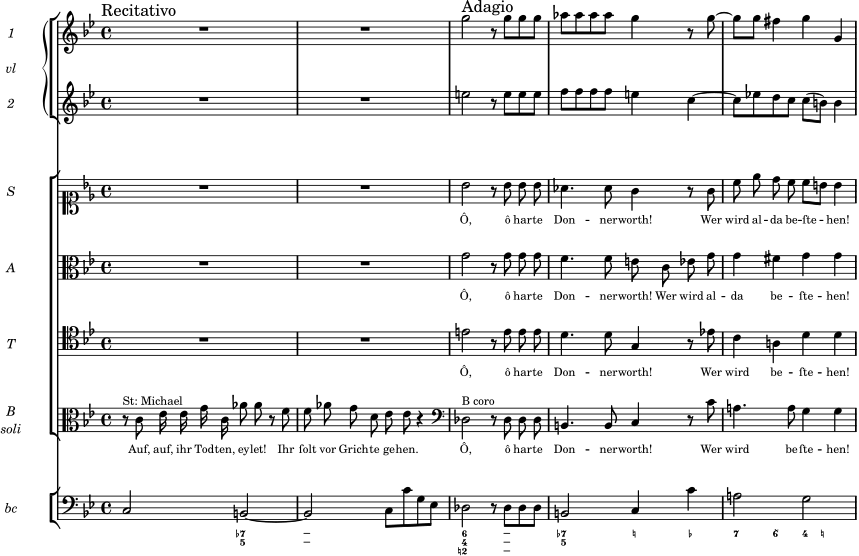 |
| 5 | 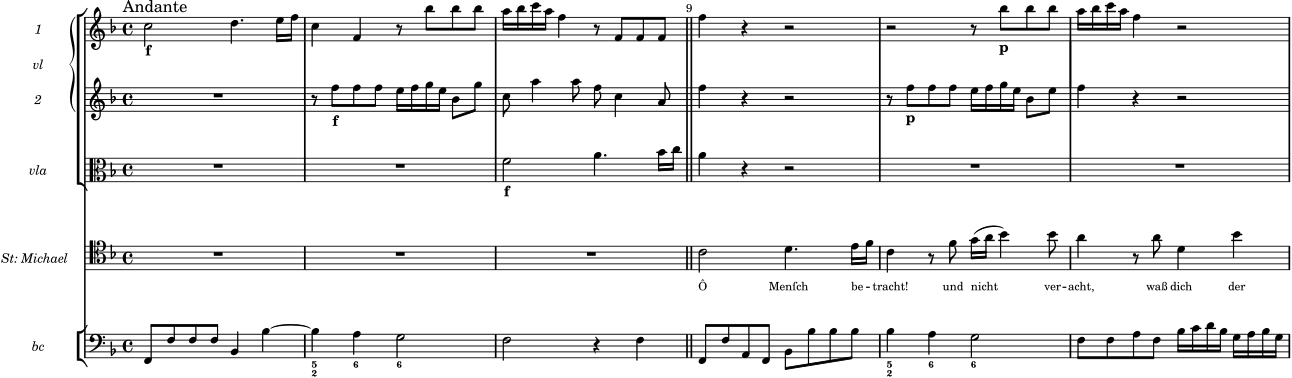 |
| 6 |  |
| 7 | 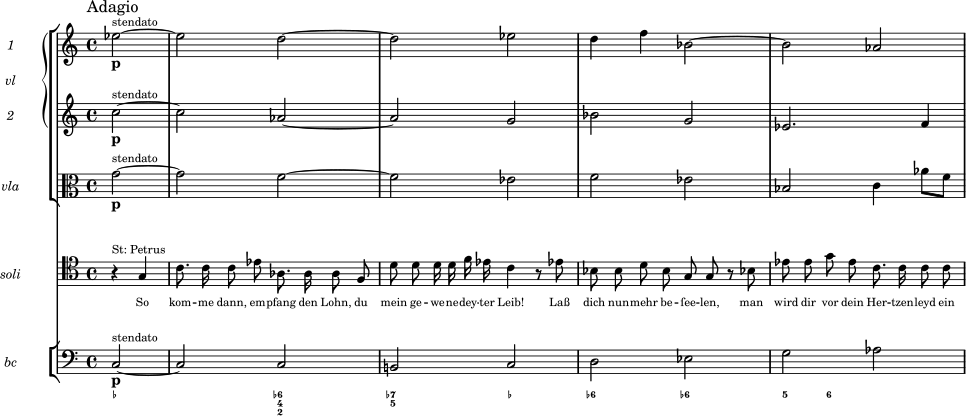 |
| 8 | 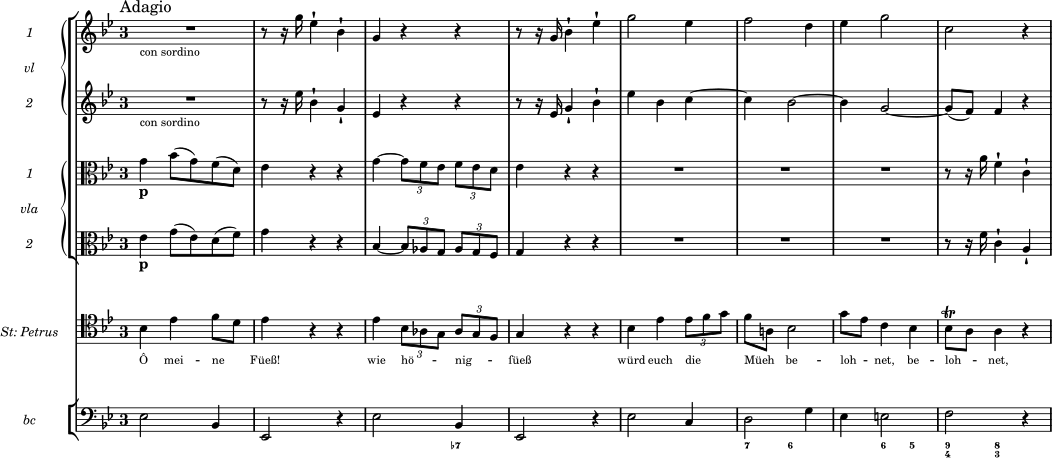 |
| 9 |  |
| 10 | 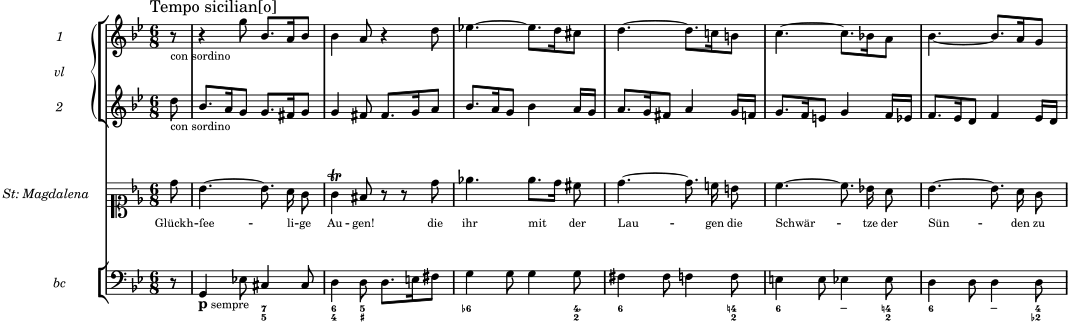 |
| 11 |  |
| 12 | 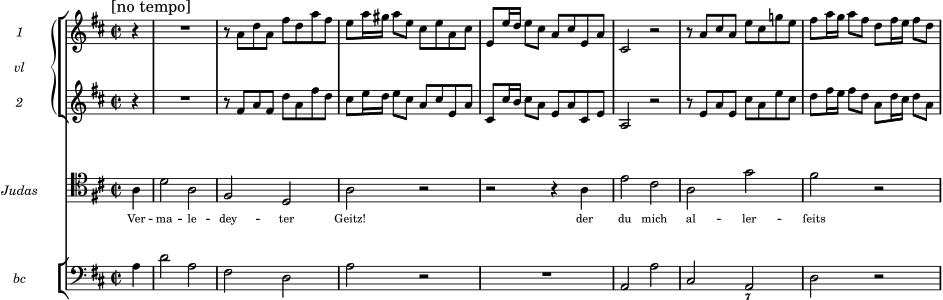 |
| 13 |  |
| 14 | 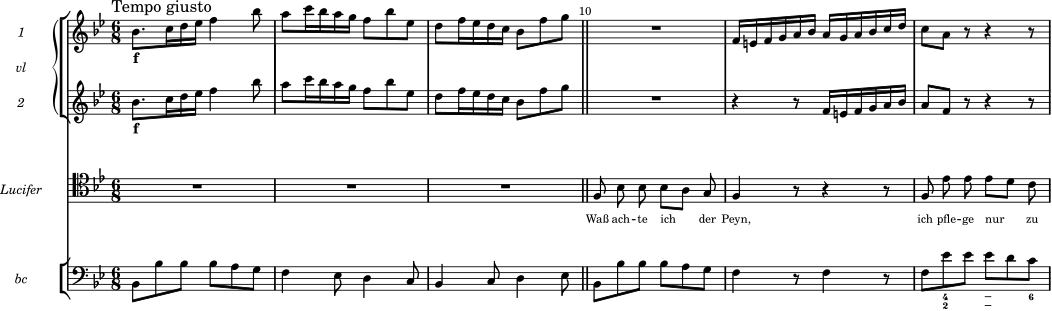 |
| 15 |  |
| 16 | 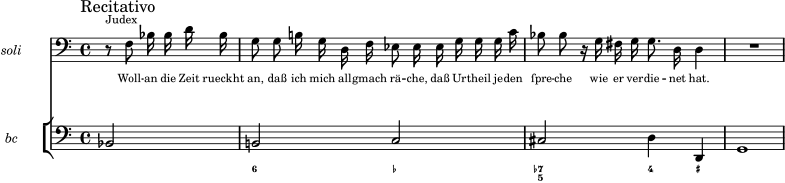 |
| 17 | 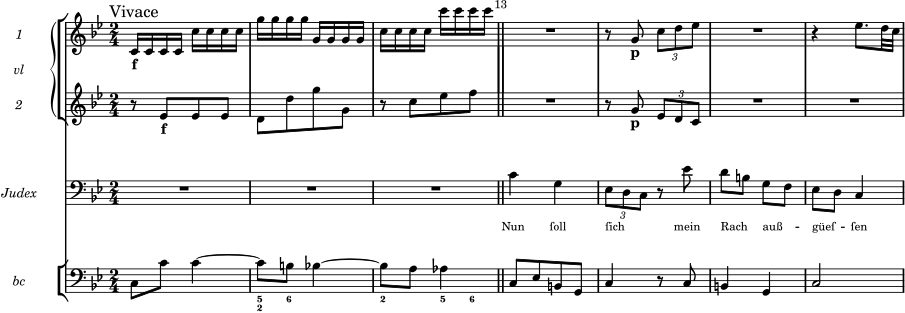 |
| 18 | 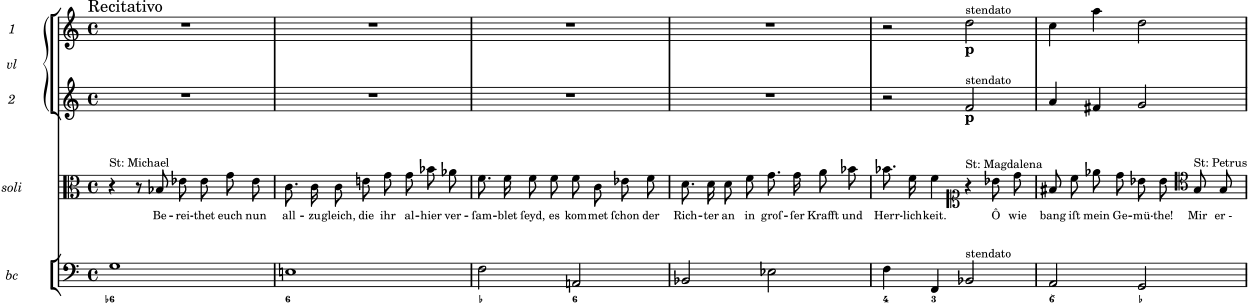 |
| 19 | 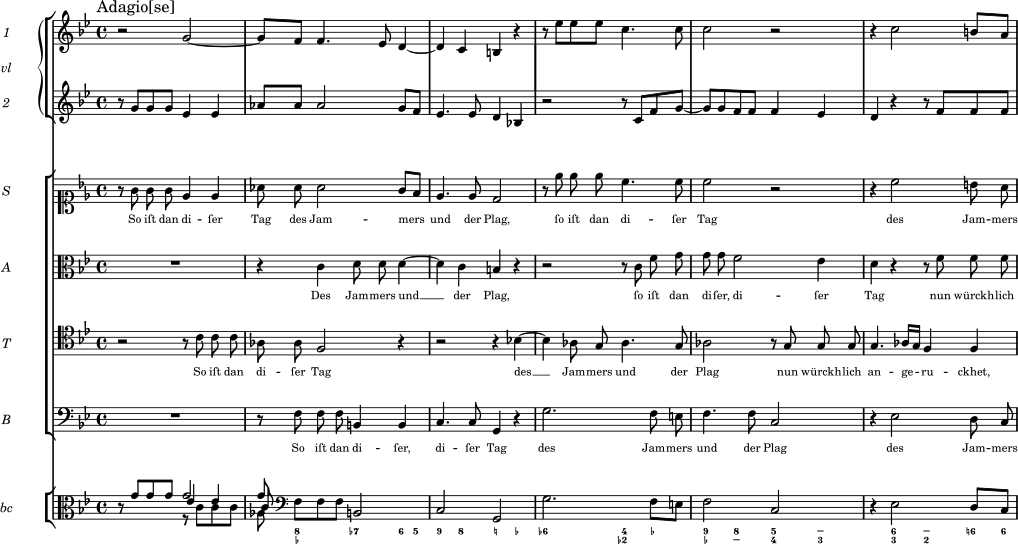 |
| 20 | 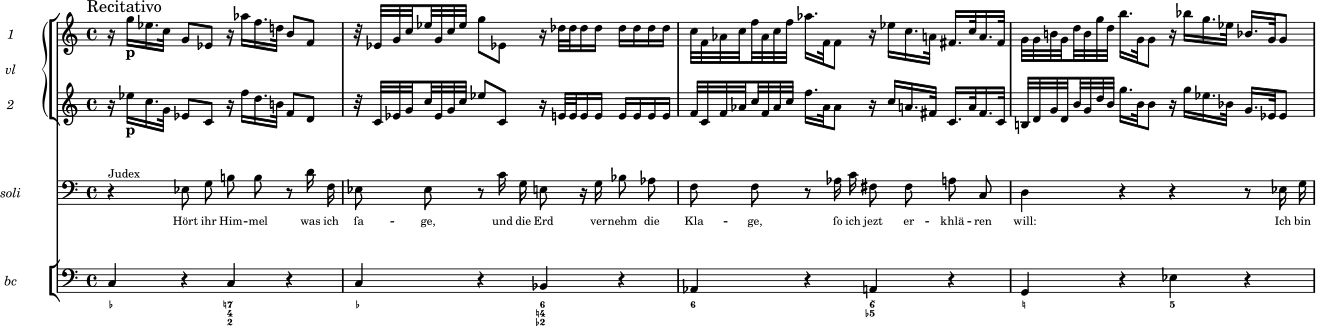 |
| 21 | 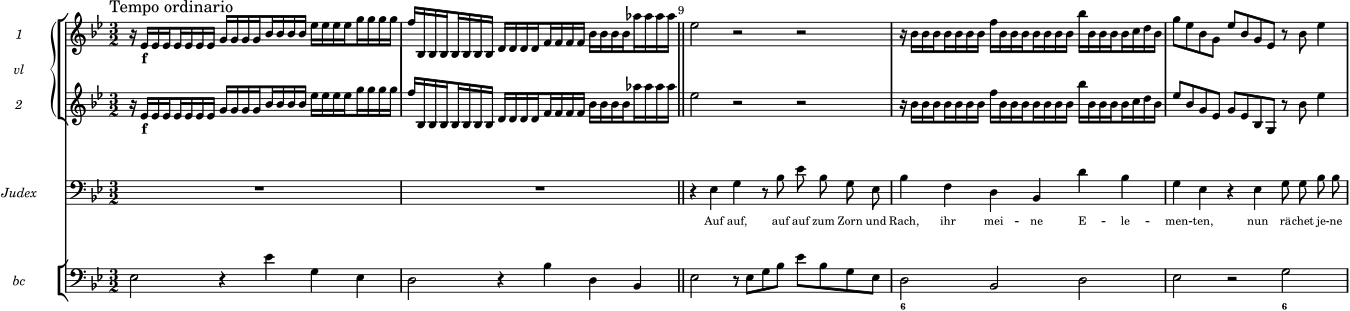 |
| 22 | 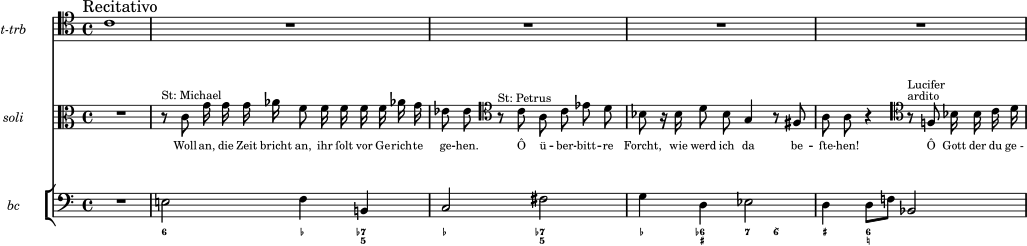 |
| 23 | 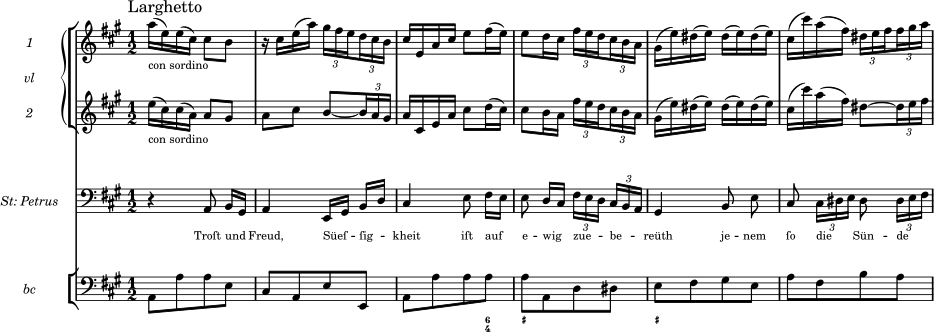 |
| 24 |  |
| 25 | 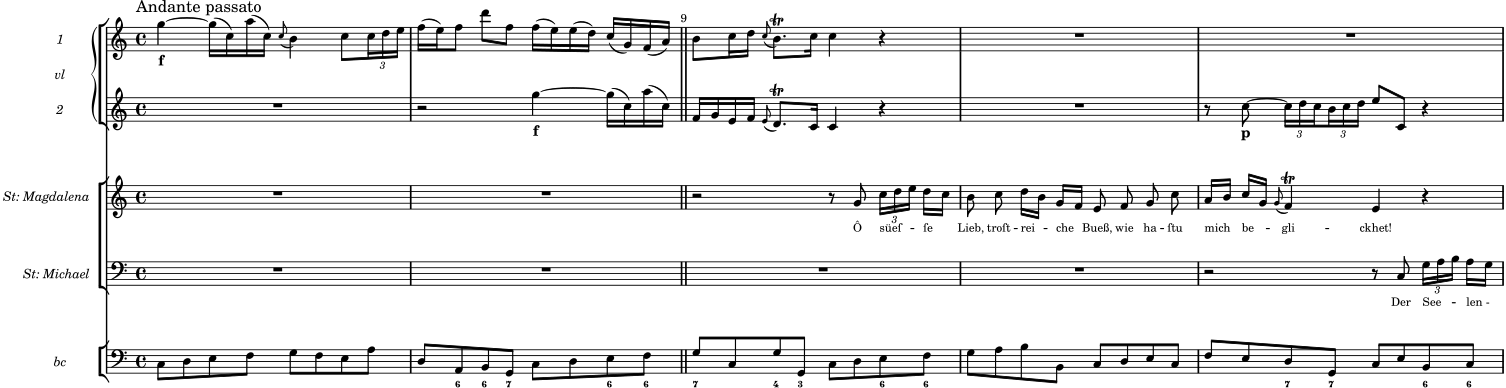 |
| 26 | 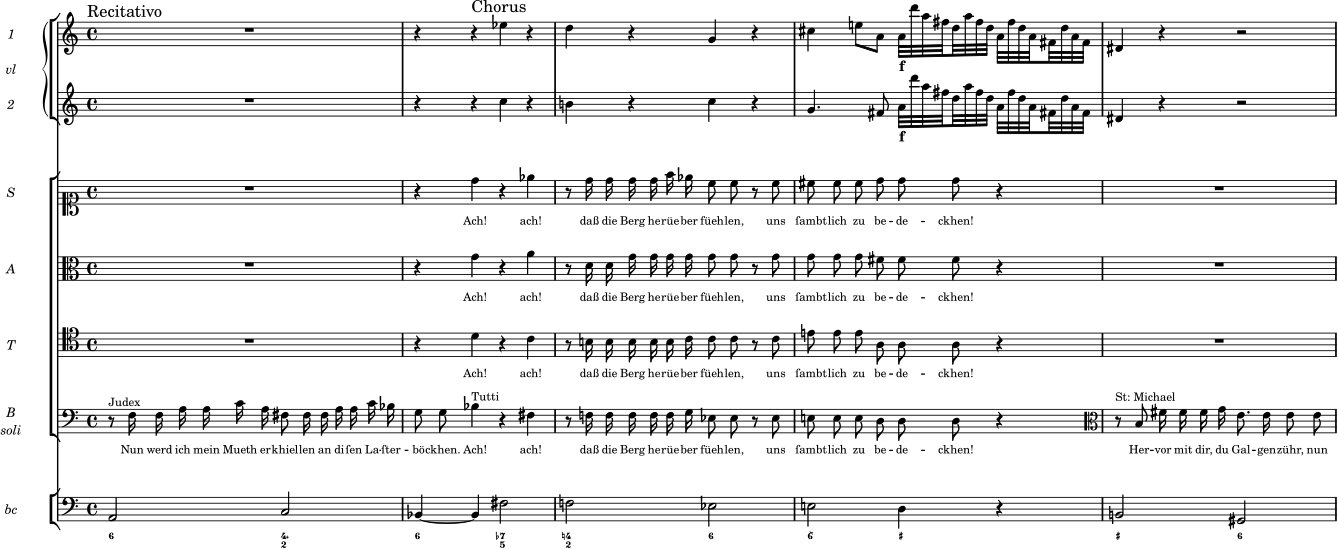 |
| 27 | 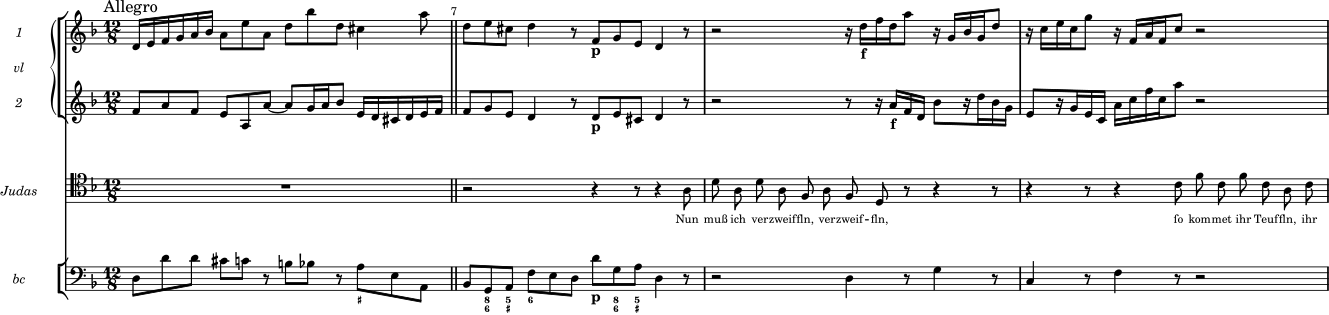 |
| 28 | 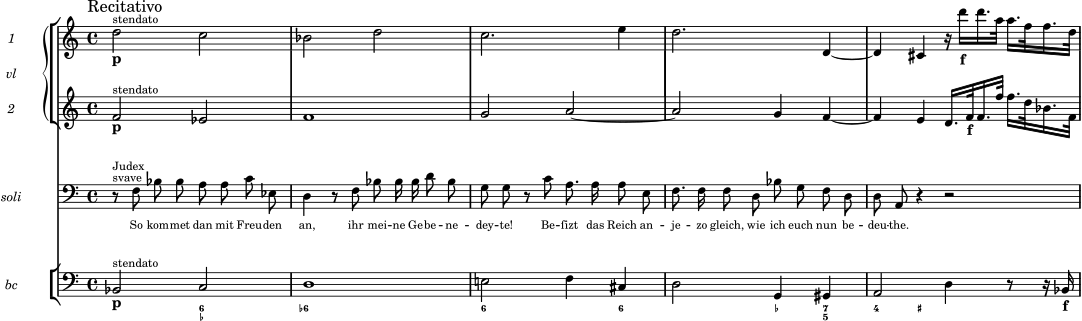 |
| 29 | 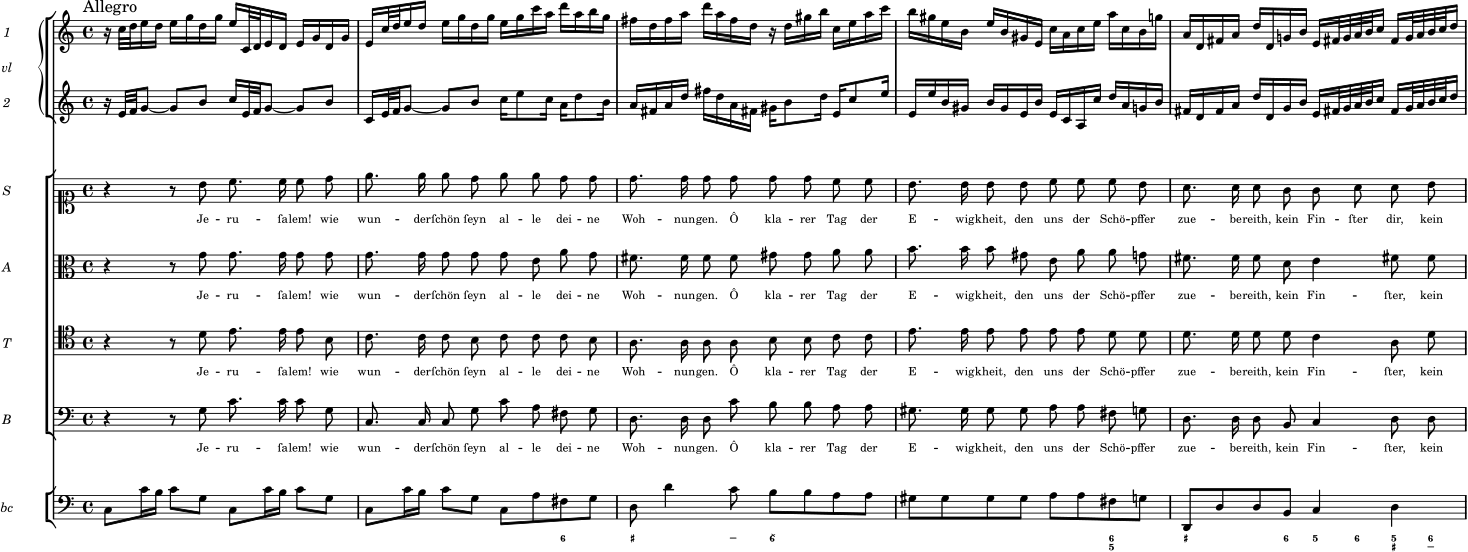 |
| Sources | C | H-Bn Ms.mus III.4 |
NoteDetails
- Identification
-
WerW A.9
HarBu 1.4
HarCa I.A.9 - ARKs
-
ark:68748/gw1a9 (human-readable catalogue entry)
ark:68748/gw1a9.mei (metadata in MEI format)
ark:68748/gw1a9.score (full score) - Scoring
- soli (S, A, 3 T, B), coro (S, A, T, B), t-trb, 2 vl, 2 vla, bc
- Roles
- St: Magdalena (S), St: Michael (A), Judas (T), Lucifer (T), St: Petrus (T), Judex (B)
- Genre
- oratorio
- Place and date of composition
- Eisenstadt (?), 1745
- Performance(s)
- Eisenstadt (1): 1745-04-16
- References
- Farkas (1994), Hárich (1976), Tank (1981, p. 305f), Winkler (2010, pp. 308–314)
- Inventories
- Sauer (1809, fol. 13v, no. 522)
- Editions
-
Vécsey (1968b, pp. 23–36),

- Notes
- Movements 2–19 and 20–29 are entitled Actus primus and Actus secundus, respectively.
Music
1 Introductio
| Tempo | Adagiose – Vivace |
| Key | C dorian |
| Meter |  |
| Extent | 95 bars |
| Scoring | vla, 2 vl, bc |
| Notes | bars 25–95 (Vivace) in 3/4 time |
2 Scena prima
| Tempo | Recitativo |
| Key | C major |
| Meter | |
| Extent | 14 bars |
| Scoring | solo (B), bc |
| Roles | Judex (B) |
3 Scena secunda
| Tempo | Adagio – Recitativo |
| Key | C dorian |
| Meter | |
| Extent | 84 bars |
| Scoring | solo (B), coro (S, A, T, B), t-trb, 2 vl, bc |
| Roles | Judex (B) |
4 Scena tertia
| Tempo | Recitativo – Adagio |
| Key | C dorian |
| Meter | |
| Extent | 22 bars |
| Scoring | solo (A), coro (S, A, T, B), 2 vl, bc |
| Roles | St: Michael (A) |
5 Aria prima
| Tempo | Andante |
| Key | F major |
| Meter | |
| Extent | 86 bars (incl. 34 bars da capo) |
| Scoring | solo (A), 2 vl, vla, bc |
| Roles | St: Michael (A) |
6 Scena quarta
| Tempo | Recitativo |
| Key | C major |
| Meter | |
| Extent | 9 bars |
| Scoring | soli (A, B), bc |
| Roles | St: Michael (A), Judex (B) |
7 Scena quinta
| Tempo | Adagio |
| Key | C major |
| Meter | |
| Extent | 6 bars |
| Scoring | solo (T), 2 vl, vla, bc |
| Roles | St: Petrus (T) |
8 Aria secunda
| Tempo | Adagio – Vivace |
| Key | E♭ lydian |
| Meter |  |
| Extent | 68 bars |
| Scoring | solo (T), 2 vl, 2 vla, bc |
| Roles | St: Petrus (T) |
| Notes | bars 34–68 (Vivace) in 2/4 time |
9 Scena sexta
| Tempo | Recitativo |
| Key | C major |
| Meter | |
| Extent | 7 bars |
| Scoring | solo (S), bc |
| Roles | St: Magdalena (S) |
10 Aria tertia
| Tempo | Tempo sicilian[o] |
| Key | G minor |
| Meter |  |
| Extent | 103 bars (incl. 40 bars da capo) |
| Scoring | solo (S), 2 vl, bc |
| Roles | St: Magdalena (S) |
11 Scena septima
| Tempo | Recitativo |
| Key | C major |
| Meter | |
| Extent | 22 bars |
| Scoring | soli (2 T), 2 vl, bc |
| Roles | Judas (T), Lucifer (T) |
12 Aria quarta
| Tempo | [no tempo] |
| Key | D major |
| Meter |  |
| Extent | 258 bars (incl. 90 bars da capo) |
| Scoring | solo (T), 2 vl, bc |
| Roles | Judas (T) |
13 [unnumbered scene]
| Tempo | Recitativo |
| Key | C major |
| Meter | |
| Extent | 18 bars |
| Scoring | solo (T), bc |
| Roles | Lucifer (T) |
14 Aria quinta
| Tempo | Tempo giusto – Adagio |
| Key | B♭ major |
| Meter | |
| Extent | 133 bars (incl. 56 bars da capo) |
| Scoring | solo (T), 2 vl, bc |
| Roles | Lucifer (T) |
| Notes | bars 76–77 (Adagio) in common time |
15 Scena octava
| Tempo | Recitativo |
| Key | C major |
| Meter | |
| Extent | 15 bars |
| Scoring | soli (A, T), bc |
| Roles | St: Michael (A), Judas (T) |
16 Scena nona
| Tempo | Recitativo |
| Key | C major |
| Meter | |
| Extent | 3 bars |
| Scoring | solo (B), bc |
| Roles | Judex (B) |
17 Aria sexta
| Tempo | Vivace |
| Key | C dorian |
| Meter |  |
| Extent | 200 bars (incl. 72 bars da capo) |
| Scoring | solo (B), 2 vl, bc |
| Roles | Judex (B) |
18 Scena decima
| Tempo | Recitativo |
| Key | C major |
| Meter | |
| Extent | 15 bars |
| Scoring | soli (S, A, 3 T), 2 vl, bc |
| Roles | St: Magdalena (S), St: Michael (A), Judas (T), Lucifer (T), St: Petrus (T) |
19 Chorus
| Tempo | Adagio[se] |
| Key | C dorian |
| Meter | |
| Extent | 34 bars |
| Scoring | coro (S, A, T, B), 2 vl, bc |
20 Scena prima
| Tempo | Recitativo – Adagio – Recitativo |
| Key | C major |
| Meter | |
| Extent | 45 bars |
| Scoring | solo (B), coro (S, A, T, B), 2 vl, bc |
| Roles | Judex (B) |
21 Aria prima
| Tempo | Tempo ordinario – Adagio |
| Key | E♭ lydian |
| Meter |  |
| Extent | 160 bars (incl. 62 bars da capo) |
| Scoring | solo (B), 2 vl, bc |
| Roles | Judex (B) |
| Notes | bars 97–98 (Adagio) in common time |
22 Scena secunda
| Tempo | Recitativo |
| Key | C major |
| Meter | |
| Extent | 25 bars |
| Scoring | soli (A, 2 T, B), t-trb, 2 vl, bc |
| Roles | St: Michael (A), Lucifer (T), St: Petrus (T), Judex (B) |
23 Aria secunda
| Tempo | Larghetto |
| Key | A major |
| Meter |  |
| Extent | 88 bars (incl. 29 bars da capo) |
| Scoring | solo (T), 2 vl, bc |
| Roles | St: Petrus (T) |
24 Scena tertia
| Tempo | Recitativo |
| Key | C major |
| Meter | |
| Extent | 31 bars |
| Scoring | soli (S, A, T, B), 2 vl, bc |
| Roles | St: Magdalena (S), St: Michael (A), Lucifer (T), Judex (B) |
25 Aria tertia (Duetto)
| Tempo | Andante passato |
| Key | C major |
| Meter | |
| Extent | 90 bars (incl. 36 bars da capo) |
| Scoring | soli (S, A), 2 vl, bc |
| Roles | St: Magdalena (S), St: Michael (A) |
26 Scena quarta
| Tempo | Recitativo |
| Key | C major |
| Meter | |
| Extent | 63 bars |
| Scoring | soli (A, 2 T, B), coro (S, A, T, B), 2 vl, bc |
| Roles | St: Michael (A), Judas (T), Lucifer (T), Judex (B) |
27 Aria quarta
| Tempo | Allegro |
| Key | D minor |
| Meter |  |
| Extent | 40 bars |
| Scoring | solo (T), 2 vl, bc |
| Roles | Judas (T) |
28 Scena quinta
| Tempo | Recitativo – Adagio |
| Key | C major |
| Meter | |
| Extent | 22 bars |
| Scoring | soli (S, A, T, B), coro (S, A, T, B), 2 vl, bc |
| Roles | St: Magdalena (S), St: Michael (A), St: Petrus (T), Judex (B) |
29 Chorus
| Tempo | Allegro – Presto |
| Key | C major |
| Meter | |
| Extent | 70 bars |
| Scoring | coro (S, A, T, B), 2 vl, bc |
Sources
Manuscript copy
Classification
notated music · manuscript · copy · score · fair copy · complete
Location(s)
H-Bn Ms.mus III.4 (digitized version, catalogue entry)
RISM
Publication, dating
1745-05
Scribe(s)
Johann Georg Thonner (brown ink)
Title page(s)
[fol. 1r]Physical description
92 p.
33 × 21 cm
hand-ruled paper, 14–16 staves (10 mm)
Components and notes
- at end of score: Per hoC opUs sIs nobIs sVaVIs IUDeX In IUDICIJ | DIe. (chronogram resolves to 1735)
A.10
Esther

| Identifiers | HarBu 1.5 · HarCa I.A.10 |
| ARK | ark:68748/gw1a10 |
| Sources | H-Bn Ms.mus III.5 |
| Notes | |
| References | Farkas (1994), Hárich (1976), Somfai (1963-1964), Tank (1981, p. 306) |
| Inventories | Sauer (1809, fol. 13v, no. 528) |
| Editions |
A.11
Der verlorene Sohn
Der Von der Gerechtigkeit abgeſchröckte und Durch die Barmherzigkeit wiederum bewegte, Bußfertige und zu seinem Liebreichen Vatter Vertrauensvoll zurück-kehrende Verlohrne Sohn oder Der zu Seinen Verliebten Heyland Sich wendende reumüthige Sünder
| 1 | 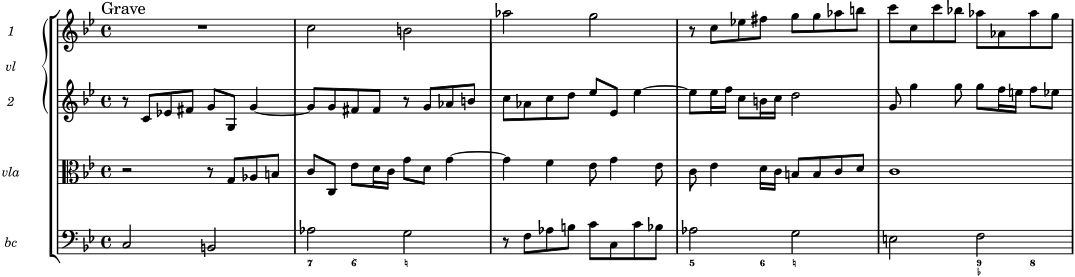 |
| 2 |  |
| 3 | 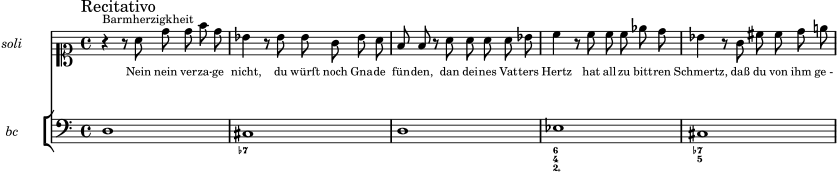 |
| 4 | 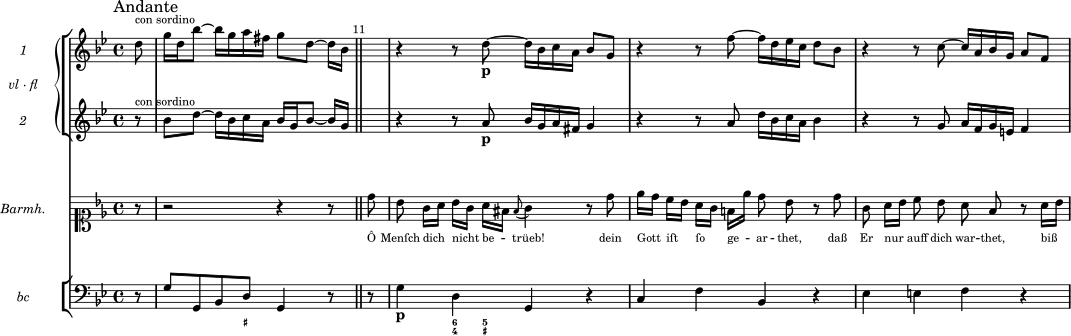 |
| 5 |  |
| 6 | 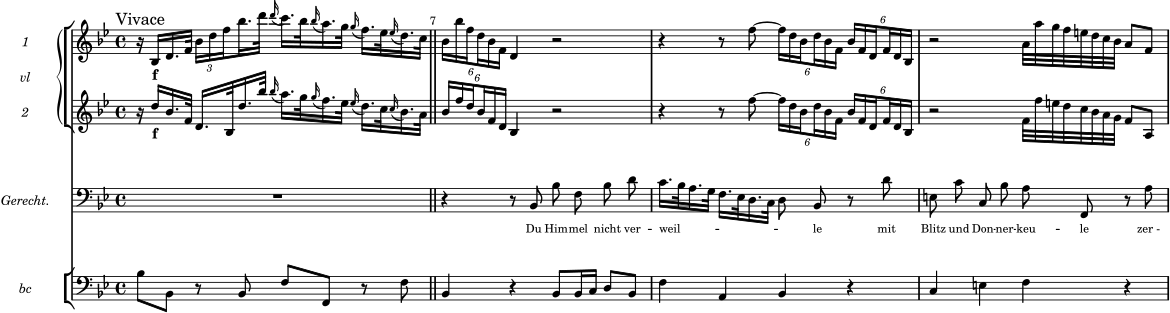 |
| 7 |  |
| 8 | 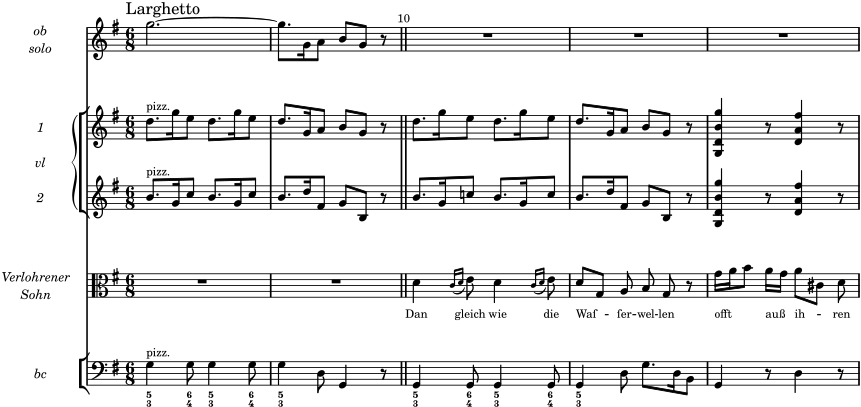 |
| 9 |  |
| 10 | 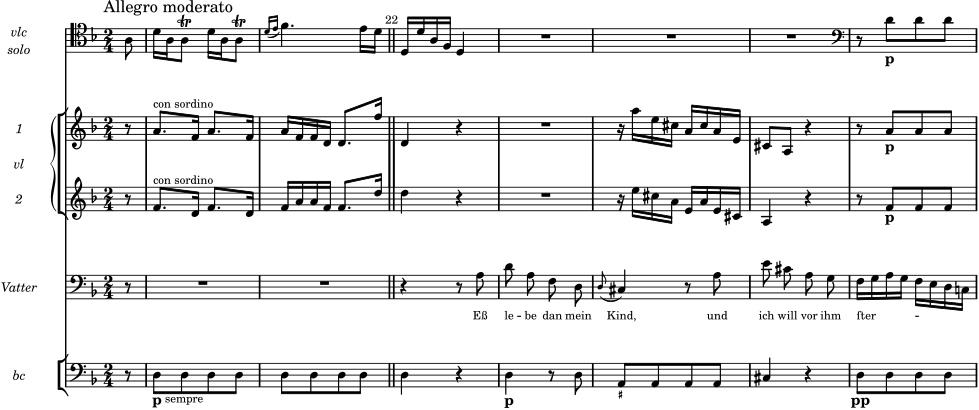 |
| 11 | 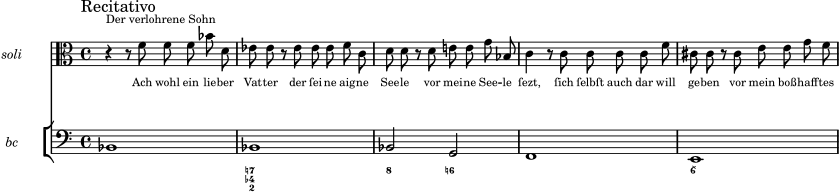 |
| 12 | 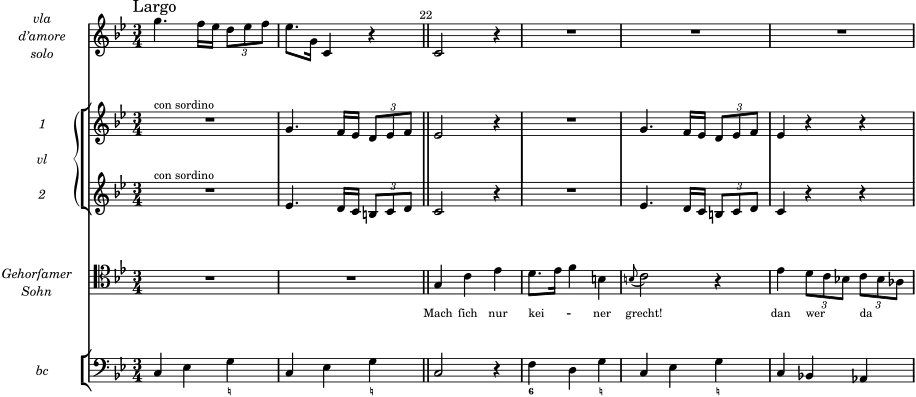 |
| 13 | 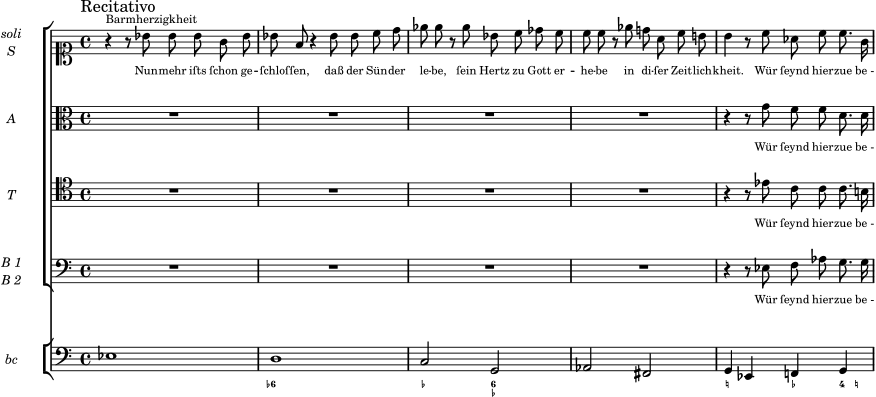 |
| 14 | 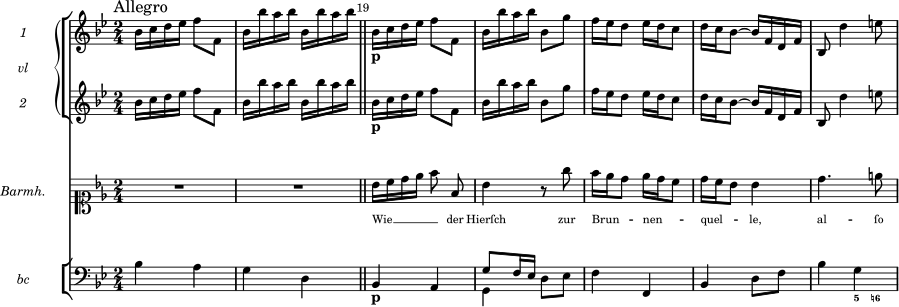 |
| 15 |  |
| 16 | 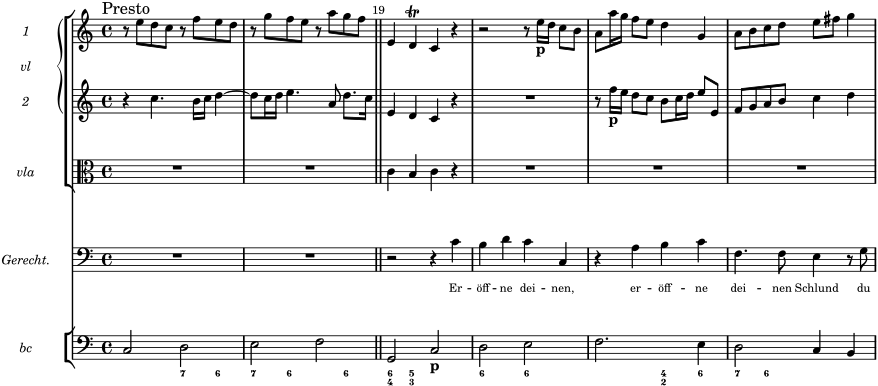 |
| 17 |  |
| 18 | 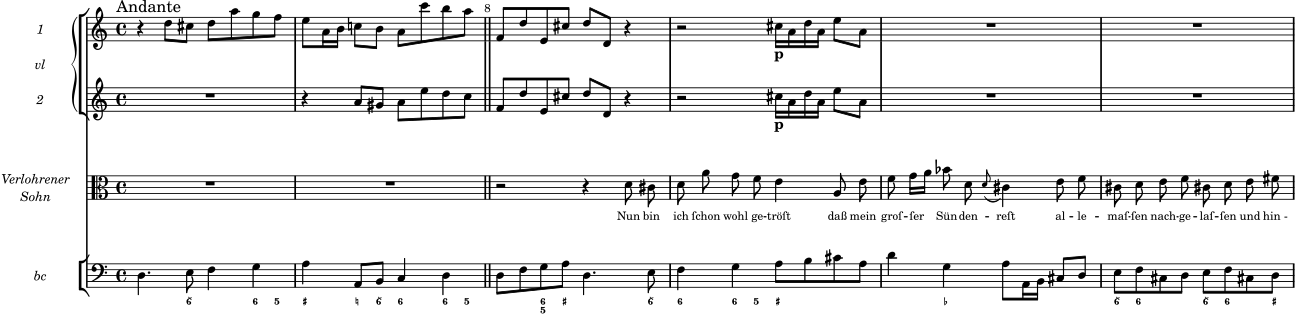 |
| 19 | 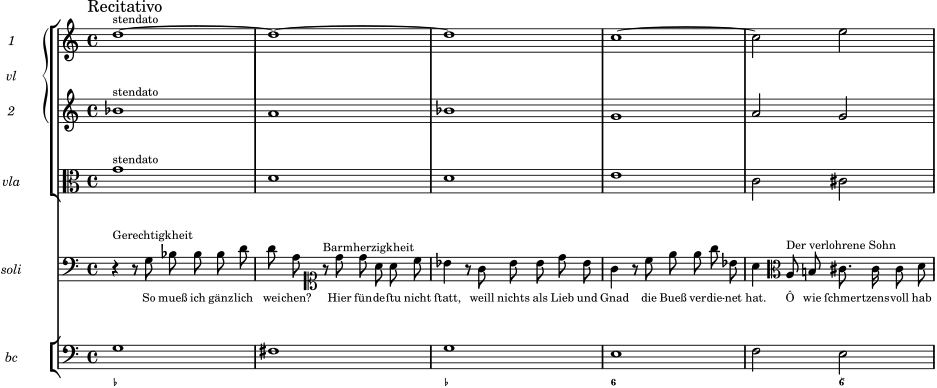 |
| 20 | 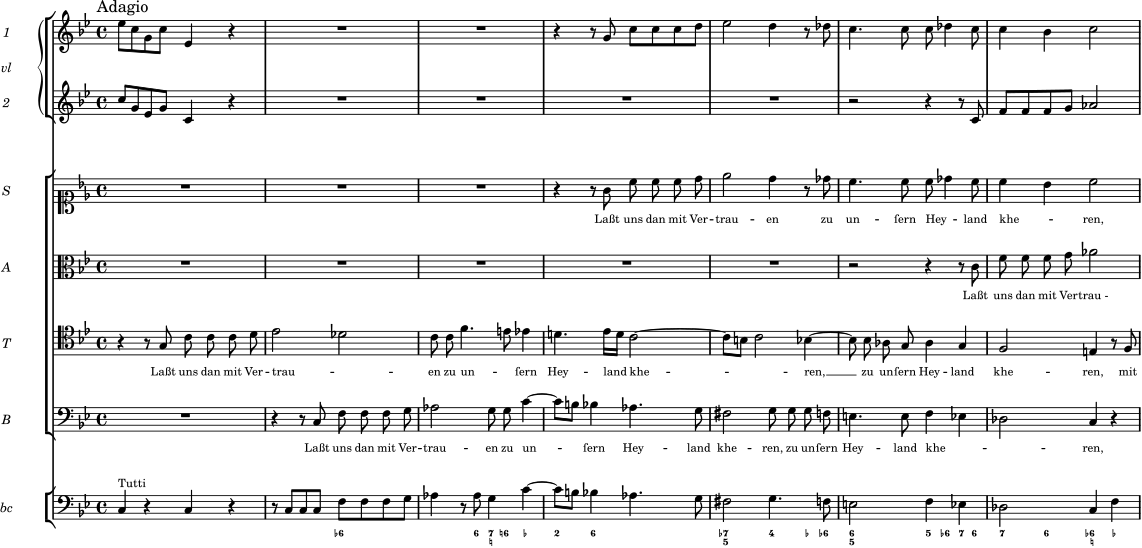 |
| Sources | C | H-Bn Ms.mus III.6 |
NoteDetails
- Identification
-
WerW A.11
HarBu 1.6
HarCa I.A.11 - ARKs
-
ark:68748/gw1a11 (human-readable catalogue entry)
ark:68748/gw1a11.mei (metadata in MEI format)
ark:68748/gw1a11.score (full score) - Scoring
- soli (S, A, T, 2 B), coro (S, A, T, B), 2 fl, ob, 2 vl, vla, vlc, bc
- Roles
- Die Barmherzigkheit (S), Der verlohrene Sohn (A), Der gehorsame Sohn (T), Die Gerechtigkheit (B), Der mitleidige Vatter (B)
- Genre
- oratorio
- Place and date of composition
- Eisenstadt (?), 1738
- Performance(s)
- Eisenstadt (2): 1738-04-04 [?] and 1747-03-31
- References
- Farkas (1994), Hárich (1976), Somfai (1963-1964), Tank (1981, p. 306)
- Inventories
- Sauer (1809, fol. 13v, no. 525)
- Editions
-
- Notes
- The introduction has been published by Joseph Haydn as 4th fugue in the collection VI Fugen in Quartetten WerW M.24. Movements 2–12 and 13–20 are entitled Actus primus (only implied) and Actus secundus, respectively. While the title page lists a performance date of 1747, Thonner added the date of April 1738 at the end of the manuscript, indicating that Werner already composed (and likely also performed) the work nine years earlier.
Music
1 Introductio
| Tempo | Grave – Allegro |
| Key | C dorian |
| Meter | |
| Extent | 100 bars |
| Scoring | 2 vl, vla, bc |
2 Scena prima
| Tempo | Recitativo |
| Key | C major |
| Meter | |
| Extent | 26 bars |
| Scoring | solo (A), bc |
| Roles | Der verlohrene Sohn (A) |
| Text incipit | Wo wend ich mich nun hin |
3 Scena secunda
| Tempo | Recitativo |
| Key | C major |
| Meter | |
| Extent | 15 bars |
| Scoring | solo (S), bc |
| Roles | Die Barmherzigkheit (S) |
| Text incipit | Nein nein verzage nicht |
4 Aria prima
| Tempo | Andante |
| Key | G minor |
| Meter | |
| Extent | 115 bars (incl. 50 bars da capo) |
| Scoring | solo (S), 2 fl, 2 vl, bc |
| Roles | Die Barmherzigkheit (S) |
| Text incipit | O Mensch dich nicht betrüeb |
| Notes | last bar: Adagio |
5 Scena tertia
| Tempo | Recitativo |
| Key | C major |
| Meter | |
| Extent | 36 bars |
| Scoring | soli (A, B), bc |
| Roles | Der verlohrene Sohn (A), Die Gerechtigkheit (B) |
| Text incipit | Ach solte wohl mein Vatter |
6 Aria secunda
| Tempo | Vivace |
| Key | B♭ major |
| Meter | |
| Extent | 98 bars (incl. 39 bars da capo) |
| Scoring | solo (B), 2 vl, bc |
| Roles | Die Gerechtigkheit (B) |
| Text incipit | Du Himmel nicht verweille |
| Notes | penultimate bar: Adagio |
7 Scena quarta
| Tempo | Recitativo – Adagio |
| Key | C major |
| Meter | |
| Extent | 38 bars |
| Scoring | soli (S, A), 2 vl, vla, bc |
| Roles | Die Barmherzigkheit (S), Der verlohrene Sohn (A) |
| Text incipit | O Himmel wie waß hör ich |
8 Aria tertia
| Tempo | Larghetto |
| Key | G major |
| Meter | |
| Extent | 91 bars |
| Scoring | solo (A), ob, 2 vl, bc |
| Roles | Der verlohrene Sohn (A) |
| Text incipit | Dan gleich wie die Waßerwellen |
| Notes | ob solo |
9 Scena quinta
| Tempo | Recitativo |
| Key | C major |
| Meter | |
| Extent | 26 bars |
| Scoring | soli (S, A, 2 B), bc |
| Roles | Die Barmherzigkheit (S), Der verlohrene Sohn (A), Die Gerechtigkheit (B), Der mitleidige Vatter (B) |
| Text incipit | Mein Sohn khom ohne Scheu |
10 Aria quarta
| Tempo | Allegro moderato |
| Key | D minor |
| Meter | |
| Extent | 254 bars (incl. 108 bars da capo) |
| Scoring | solo (B), 2 vl, vlc, bc |
| Roles | Die Gerechtigkheit (B) |
| Text incipit | Eß lebe dan mein Kind |
| Notes | vlc solo |
11 Scena sexta
| Tempo | Recitativo |
| Key | C major |
| Meter | |
| Extent | 52 bars |
| Scoring | soli (A, T, B), bc |
| Roles | Der verlohrene Sohn (A), Der gehorsame Sohn (T), Der mitleidige Vatter (B) |
| Text incipit | Ach wohl ein lieber Vatter |
12 Aria quinta
| Tempo | Largo – Allegretto |
| Key | C dorian |
| Meter | |
| Extent | 247 bars (incl. 107 bars da capo) |
| Scoring | solo (T), 2 vl, vla, bc |
| Roles | Der gehorsame Sohn (T) |
| Text incipit | Mach sich nur keiner grecht |
| Notes | vla d’amore solo; bars 107–138 (Allegretto) in common time; bars 139–140: Adagio |
13 Scena prima
| Tempo | Recitativo |
| Key | C major |
| Meter | |
| Extent | 11 bars |
| Scoring | solo (S), coro (S, A, T, B), bc |
| Roles | Die Barmherzigkheit (S) |
| Text incipit | Nunmehr ists schon geschloßen |
14 Aria sexta seu prima
| Tempo | Allegro |
| Key | B♭ major |
| Meter | |
| Extent | 165 bars (incl. 66 bars da capo) |
| Scoring | solo (S), 2 vl, bc |
| Roles | Die Barmherzigkheit (S) |
| Text incipit | Wie der Hiersch zur Brunnenquelle |
| Notes | last two bars (Adagio) in common time |
15 Scena secunda
| Tempo | Recitativo |
| Key | C major |
| Meter | |
| Extent | 10 bars |
| Scoring | solo (B), bc |
| Roles | Die Gerechtigkheit (B) |
| Text incipit | Weil ich kein Macht nun habe |
16 Aria septima vel secunda
| Tempo | Presto |
| Key | C major |
| Meter | |
| Extent | 213 bars (incl. 90 bars da capo) |
| Scoring | solo (B), 2 vl, vla, bc |
| Roles | Die Gerechtigkheit (B) |
| Text incipit | Eröffne deinen Schlund |
| Notes | last bar: Adagio |
17 Scena tertia
| Tempo | Recitativo |
| Key | C major |
| Meter | |
| Extent | 12 bars |
| Scoring | soli (S, A), bc |
| Roles | Die Barmherzigkheit (S), Der verlohrene Sohn (A) |
| Text incipit | Laß ab von dein Beginnen |
18 Aria octava seu tertia (Duetto)
| Tempo | Andante |
| Key | D dorian |
| Meter | |
| Extent | 47 bars |
| Scoring | soli (S, A), 2 vl, bc |
| Roles | Die Barmherzigkheit (S), Der verlohrene Sohn (A) |
| Text incipit | Nun bin ich schon wohl getröst |
19 Scena quarta
| Tempo | Recitativo |
| Key | C major |
| Meter | |
| Extent | 21 bars |
| Scoring | soli (S, A, T, 2 B), 2 vl, vla, bc |
| Roles | Die Barmherzigkheit (S), Der verlohrene Sohn (A), Der gehorsame Sohn (T), Die Gerechtigkheit (B), Der mitleidige Vatter (B) |
| Text incipit | So mueß ich gänzlich weichen |
20 Chorus der Reumittigen Sündern
| Tempo | Adagio – Vivace – Adagio |
| Key | C dorian |
| Meter | |
| Extent | 72 bars |
| Scoring | coro (S, A, T, B), 2 vl, bc |
| Text incipit | Laßt uns dan mit Vertrauen |
Sources
Manuscript copy
Classification
notated music · manuscript · copy · score · fair copy · complete
Location(s)
H-Bn Ms.mus III.6 (digitized version, catalogue entry)
RISM
Publication, dating
1738-04
Scribe(s)
Johann Georg Thonner (brown ink)
Title page(s)
[fol. 1r]Der | Von der Gerechtigkeit abgeſchröckte | und | Durch die Barmherzigkeit wieder | um bewegte, Bußfertige | und | zu seinem Liebreichen Vatter Vertrauens- | voll zurück-kehrende | Verlohrne Sohn- | oder | Der zu Seinen | Verliebten Heyland | Sich wendende reumüthige Sünder | In einer Oratoriſchen Vorſtellung entworf- | fen und von Hochfüerſt Eſzterhazyſchen Hoffcapellen | abgeſungen bey dem heyligen Grab hoch adelicher Chorfrauen | des Regulirten Orden S. Augustini zu S. Joseph | in Eiſenſtadt. | den 31t Martii ANNO | 1747. | Ex Partibus | Joannis Georgii THonner.
Physical description
38 fol.
33 × 21 cm
hand-ruled paper, 16 staves (10 mm)
Components and notes
- score consists of title page (fol. 1r), empty page (fol. 1v), music (fol. 2r–36v), and empty pages (fol. 37r–8v)
A.12
Job
Der Jammer-volle, ſo gedultig – als unſchuldig – leydende Hussiten Fürſt JOB oder Der dadurch vorgeſtelte, und von anbegin erwählte allerhöchſte König der Juden Chriſtus JEſus Beede in ihren Schmerzen um From Geſinten Herzen Ein mitleyden zu erwecken
| 1 | 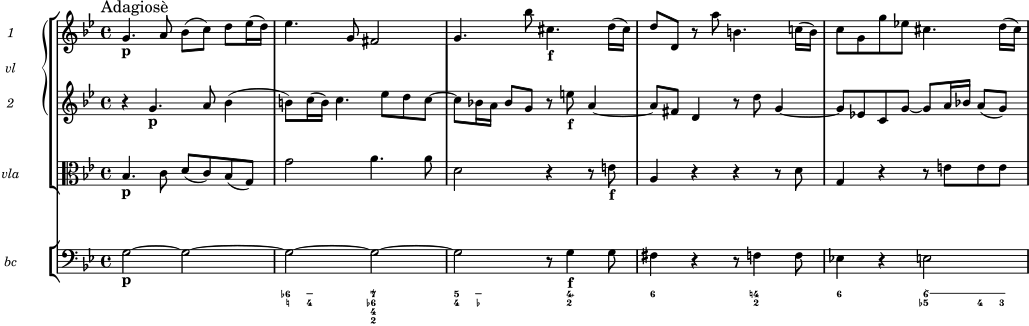 |
| 2 |  |
| 3 | 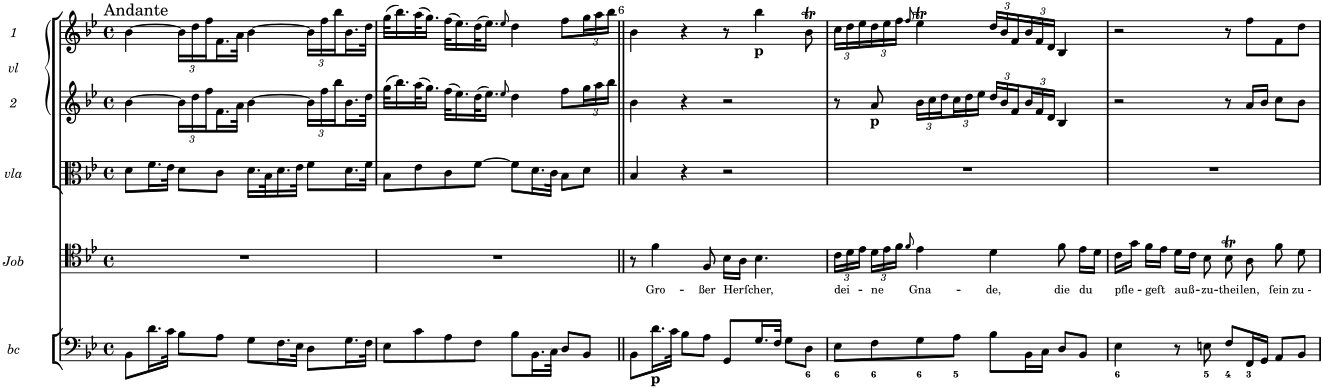 |
| 4 |  |
| 5 | 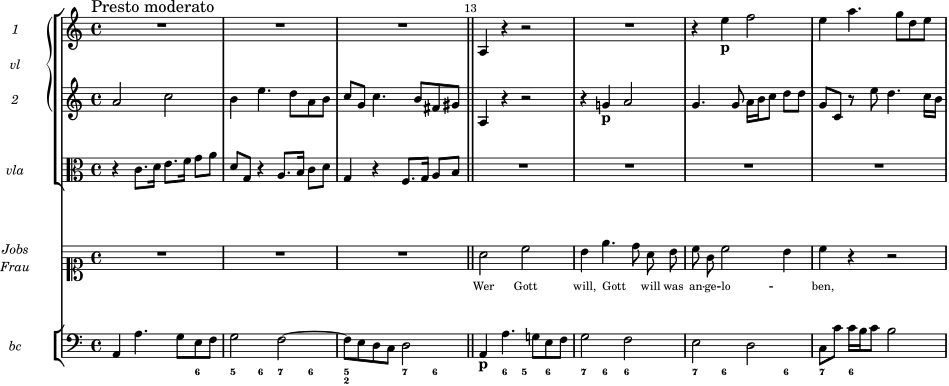 |
| 6 | 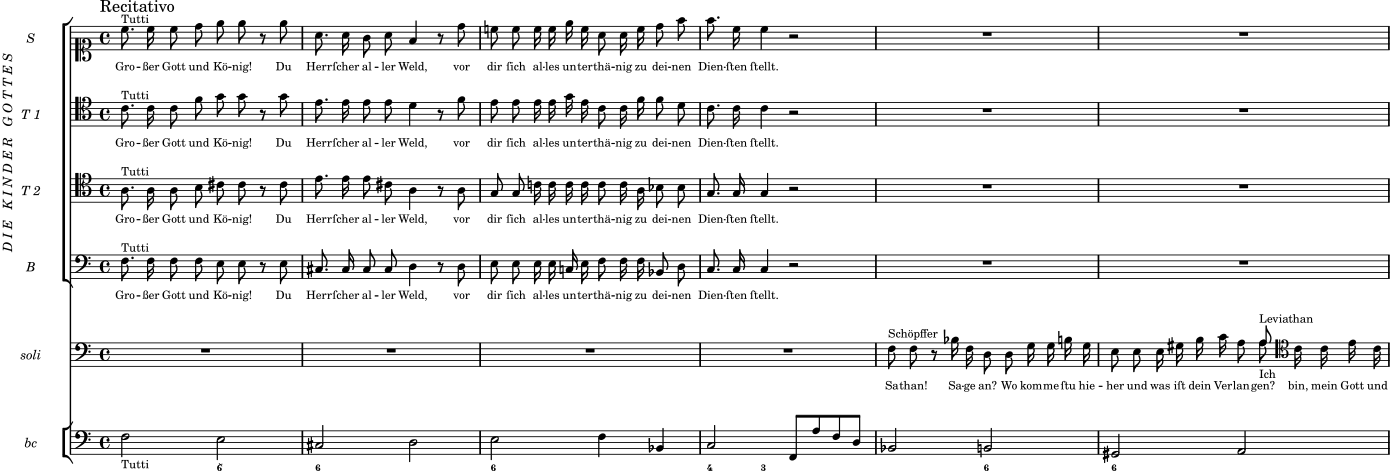 |
| 7 | 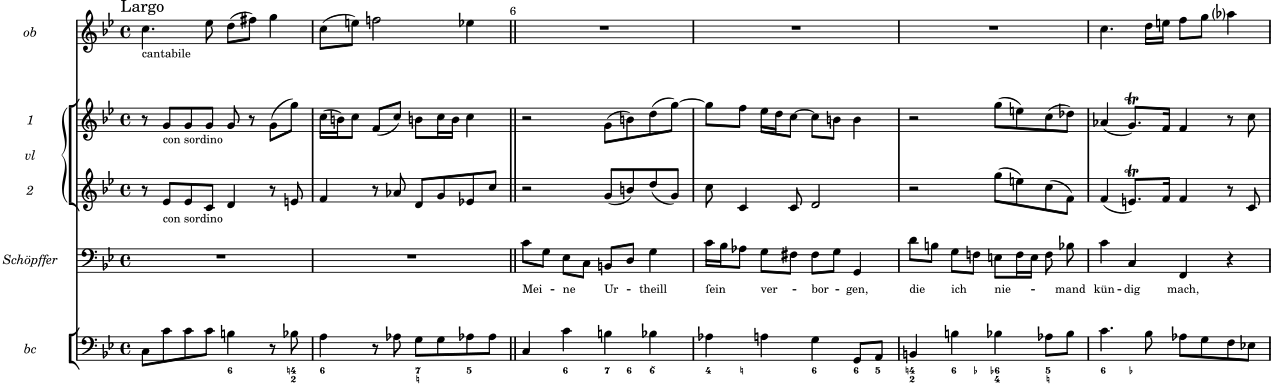 |
| 8 |  |
| 9 | 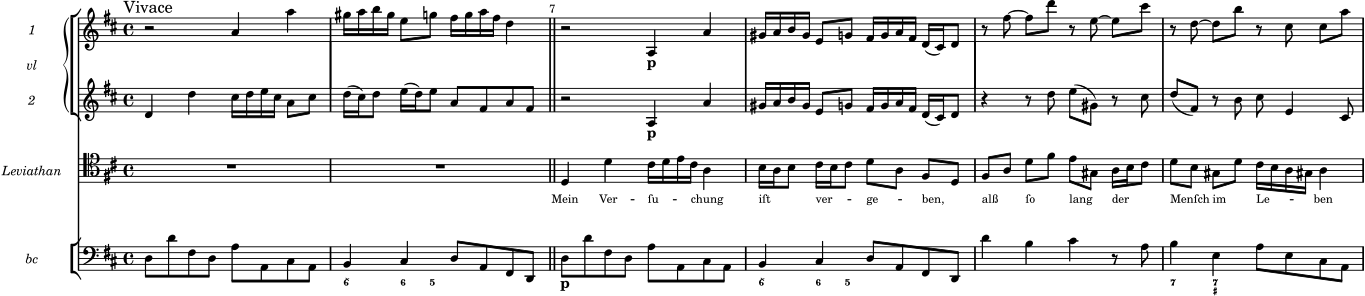 |
| 10 | 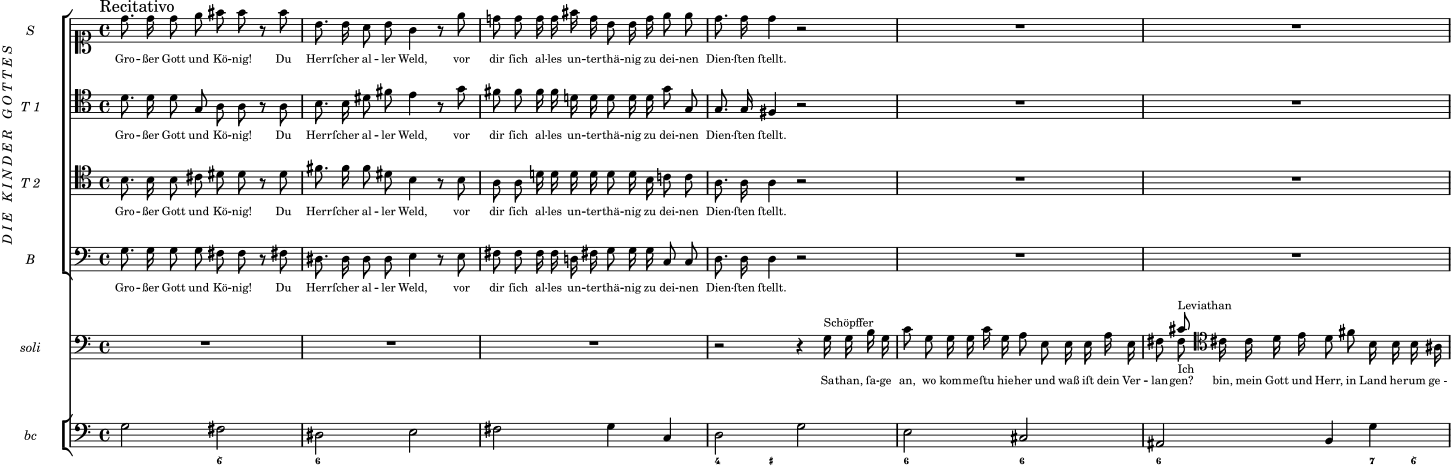 |
| 11 |  |
| 12 |  |
| 13 |  |
| 14 |  |
| 15 | 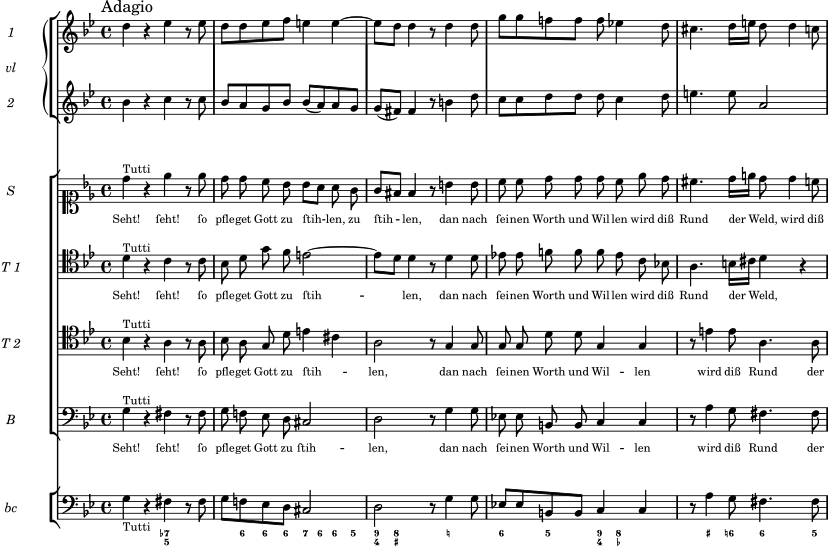 |
| 16 |  |
| 17 | 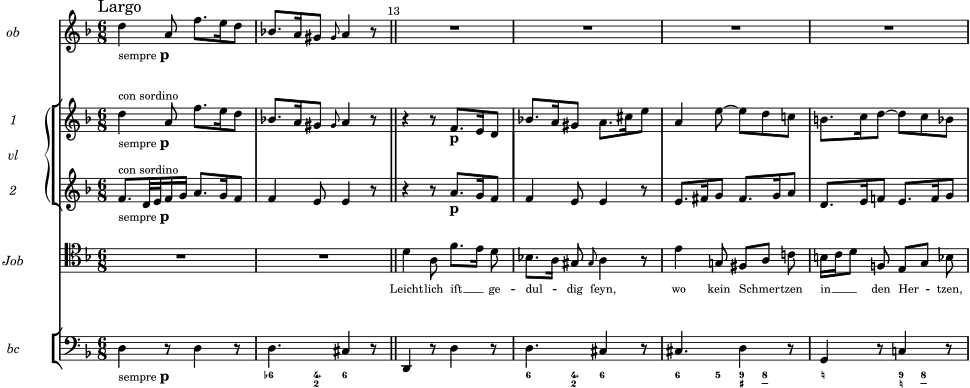 |
| 18 |  |
| 19 | 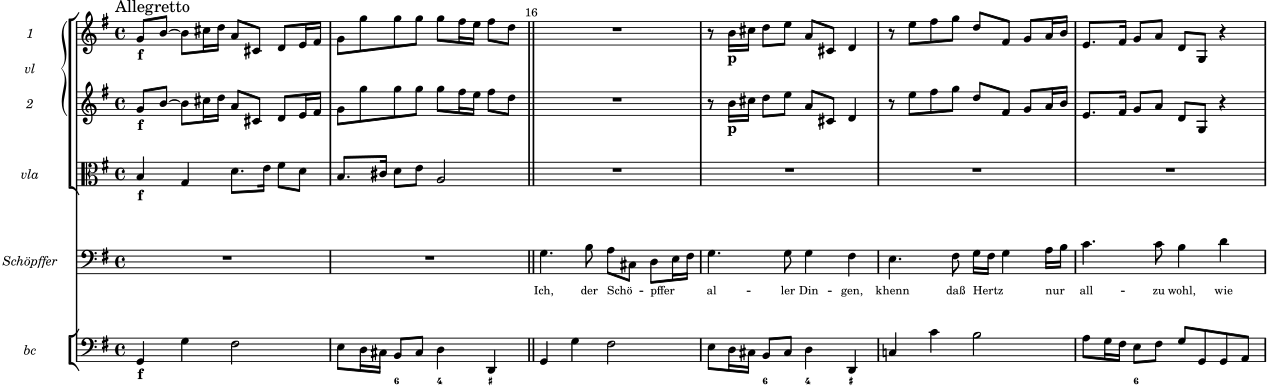 |
| 20 | 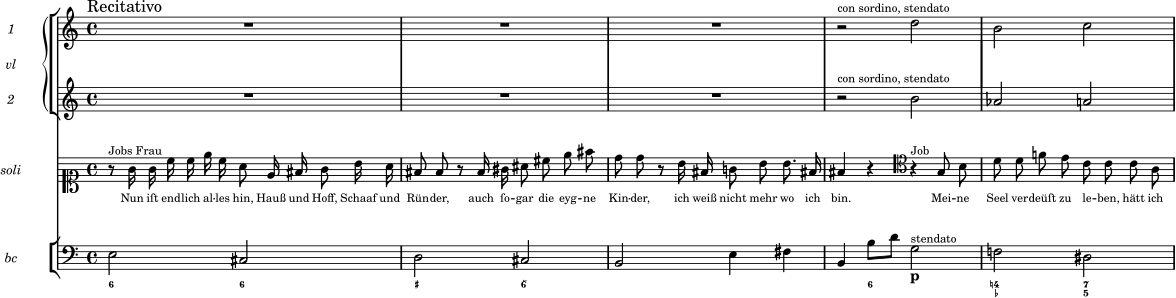 |
| 21 | 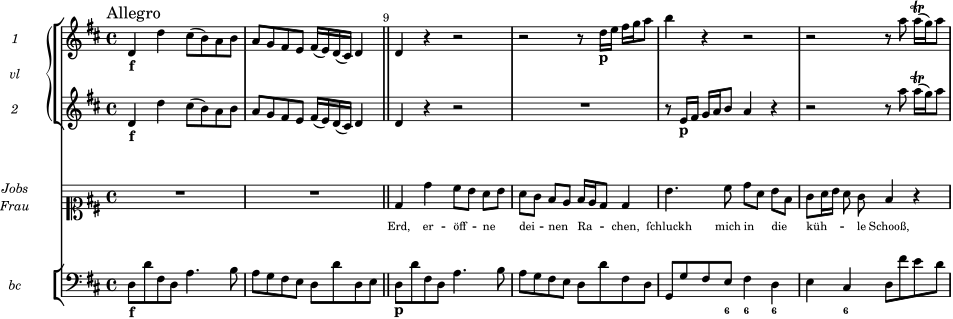 |
| 22 | 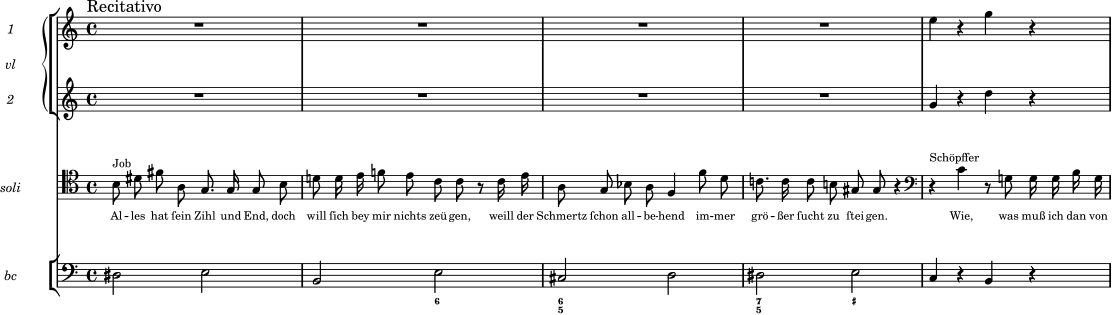 |
| 23 |  |
| 24 | 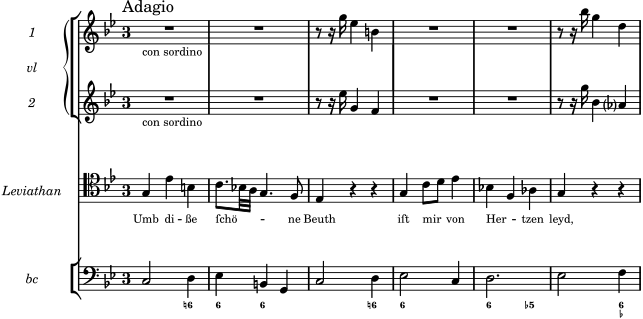 |
| 25 |  |
| 26 | 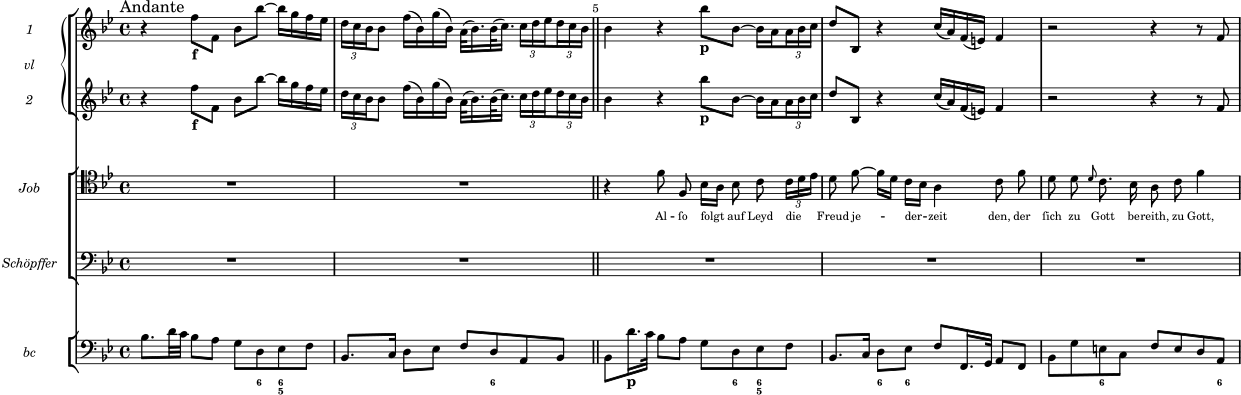 |
| 27 |  |
| 28 | 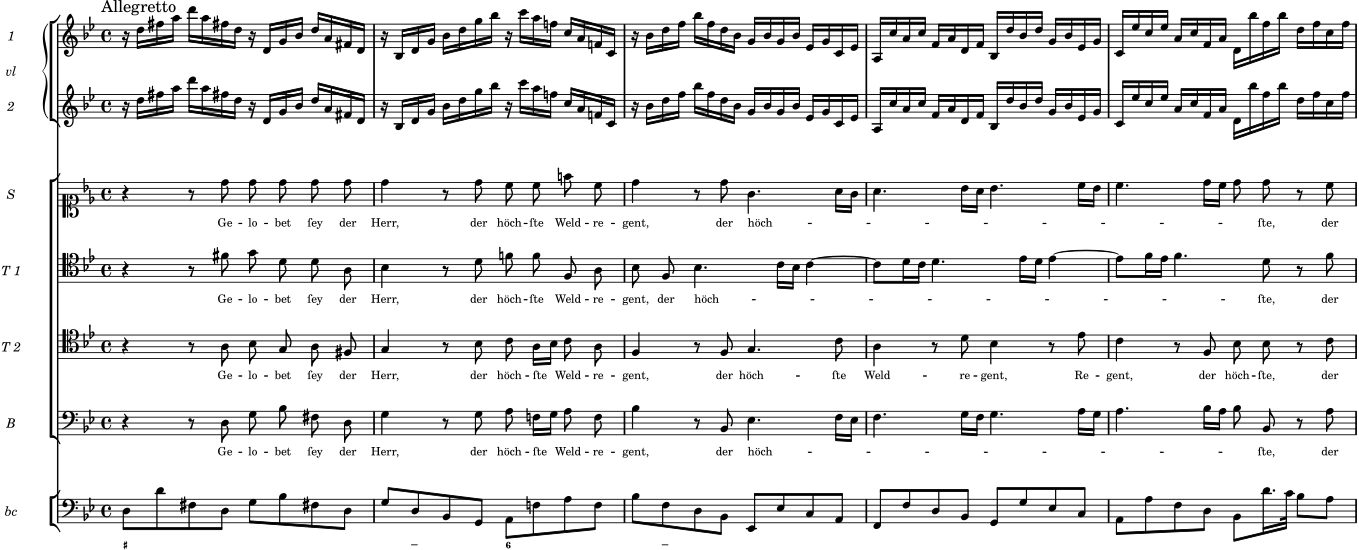 |
| Sources | C | H-Bn Ms.mus III.7 |
NoteDetails
- Identification
-
WerW A.12
HarBu 1.7
HarCa I.A.12 - ARKs
-
ark:68748/gw1a12 (human-readable catalogue entry)
ark:68748/gw1a12.mei (metadata in MEI format)
ark:68748/gw1a12.score (full score) - Scoring
- soli (S, 3 T, B), coro (S, 2 T, B), ob, 2 vl, vla, bc
- Roles
- Jobs Frau (S), Eliphas (T), Job (T), Leviathan (T), Schöpffer (B)
- Genre
- oratorio
- Place and date of composition
- Eisenstadt, 1748
- Performance(s)
- Eisenstadt (1): 1748-04-12
- References
- Farkas (1994), Hárich (1976), Somfai (1963-1964), Tank (1981, p. 307)
- Inventories
- Sauer (1809, fol. 13v, no. 524)
- Editions
-
- Notes
- The introduction has been published by Joseph Haydn as 6th fugue in the collection VI Fugen in Quartetten WerW M.24. Movements 2–15 and 16–28 are entitled Actus primus and Pars secunda, respectively.
Music
1 Introductio Oratoria
| Tempo | Adagiosè |
| Key | G minor |
| Meter | |
| Extent | 70 bars |
| Scoring | 2 vl, bc, vla |
| Section | Tempo | Key | Meter | Extent | Scoring | Notes |
|---|---|---|---|---|---|---|
| [no title] | Adagiosè | G minor | |
21 | 2 vl, bc, vla | |
| [no title] | Vivace passato | G minor | |
49 | 2 vl, bc, vla |
2 Scena prima
| Tempo | Recitativo |
| Key | C major |
| Meter | |
| Extent | 18 bars |
| Scoring | soli (2 T), bc |
| Roles | Eliphas (T), Job (T) |
| Text incipit | Ô mich beglückhter Job! wie werd ich wohl bezahlen |
3 Aria prima
| Tempo | Andante |
| Key | B♭ major |
| Meter | |
| Extent | 63 bars (incl. 24 bars da capo) |
| Scoring | solo (T), 2 vl, vla, bc |
| Roles | Job (T) |
| Text incipit | Großer Herſcher, deine Gnade, die du pflegeſt außzutheilen |
4 Scena secunda
| Tempo | Recitativo |
| Key | C major |
| Meter | |
| Extent | 17 bars |
| Scoring | soli (S, T), bc |
| Roles | Jobs Frau (S), Job (T) |
| Text incipit | Beglückht biſtu mein Job! Und wirſt auch ſtets geſegnet ſein |
5 Aria secunda
| Tempo | Presto moderato – Largo |
| Key | A minor |
| Meter | |
| Extent | 146 bars (incl. 56 bars da capo) |
| Scoring | solo (S), 2 vl, vla, bc |
| Roles | Jobs Frau (S) |
| Text incipit | Wer Gott will was angeloben, und das Werckh wird auffgeſchoben |
6 Scena tertia
| Tempo | Recitativo |
| Key | C major |
| Meter | |
| Extent | 26 bars |
| Scoring | soli (T, B), coro (S, 2 T, B), bc |
| Roles | Leviathan (T), Schöpffer (B) |
| Text incipit | Großer Gott und König! Du Herrſcher aller Weld |
7 Aria tertia
| Tempo | Largo |
| Key | C dorian |
| Meter | |
| Extent | 66 bars (incl. 28 bars da capo) |
| Scoring | solo (B), ob, 2 vl, bc |
| Roles | Schöpffer (B) |
| Text incipit | Meine Urtheill ſein verborgen, die ich niemand kündig mach |
8 Scena quarta
| Tempo | Recitativo – Adagio |
| Key | C major |
| Meter | |
| Extent | 63 bars |
| Scoring | soli (2 T), 2 vl, vla, bc |
| Roles | Job (T), Leviathan (T) |
| Text incipit | Weil mir dan Gwald gegeben, meine Hand an Job zu ſtreckhen |
9 Aria quinta
| Tempo | Vivace |
| Key | D major |
| Meter | |
| Extent | 79 bars (incl. 30 bars da capo) |
| Scoring | solo (T), 2 vl, bc |
| Roles | Leviathan (T) |
| Text incipit | Mein Verſuchung iſt vergeben, alß ſo lang der Menſch im Leben |
10 Scena quinta
| Tempo | Recitativo |
| Key | C major |
| Meter | |
| Extent | 42 bars |
| Scoring | soli (2 T, B), coro (S, 2 T, B), 2 vl, bc |
| Roles | Job (T), Leviathan (T), Schöpffer (B) |
| Text incipit | Großer Gott und König! Du Herrſcher aller Weld |
11 Scena sexta
| Tempo | Recitativo |
| Key | C major |
| Meter | |
| Extent | 19 bars |
| Scoring | soli (S, T), bc |
| Roles | Jobs Frau (S), Job (T) |
| Text incipit | Ey, ey, wie gar ein frommen Mann habe ich doch überkhommen |
12 Scena septima
| Tempo | [Recitativo] |
| Key | C major |
| Meter | |
| Extent | 33 bars |
| Scoring | soli (S, 3 T, B), bc |
| Roles | Jobs Frau (S), Eliphas (T), Job (T), Leviathan (T), Schöpffer (B) |
| Text incipit | Die Peyn iſt alzu groß, hier muß man billich ſchweigen |
13 Aria quinta
| Tempo | Andante |
| Key | D minor |
| Meter | |
| Extent | 113 bars (incl. 45 bars da capo) |
| Scoring | solo (T), bc |
| Roles | Eliphas (T) |
| Text incipit | Alſo ſeyn der Menſchen Gmüth, offt der Frommen auch ſogar |
14 [unnumbered scene]
| Tempo | Recitativo |
| Key | C major |
| Meter | |
| Extent | 6 bars |
| Scoring | solo (T), bc |
| Roles | Job (T) |
| Text incipit | Ey laßet mich dan raſten auf diſen Krankhenbeth |
15 Chorus deren Kindern Gottes
| Tempo | Adagio – Vivace |
| Key | G minor |
| Meter | |
| Extent | 24 bars |
| Scoring | coro (S, 2 T, B), 2 vl, bc |
| Text incipit | Seht! ſeht! ſo pfleget Gott zu ſtihlen, dan nach ſeinen Worth und Willen |
16 Scena prima
| Tempo | Recitativo, Adagio |
| Key | C major |
| Meter | |
| Extent | 45 bars |
| Scoring | soli (S, 2 T), bc |
| Roles | Jobs Frau (S), Eliphas (T), Job (T) |
| Text incipit | Ô daß große Hertzenleyd ſo meine Seel empfündet |
17 Aria sexta (Siciliana)
| Tempo | Largo |
| Key | D minor |
| Meter | |
| Extent | 116 bars (incl. 37 bars da capo) |
| Scoring | solo (T), ob, 2 vl, bc |
| Roles | Job (T) |
| Text incipit | Leichtlich iſt geduldig ſeyn, wo kein Schmertzen in den Hertzen |
| Section | Tempo | Key | Meter | Extent | Scoring | Notes |
|---|---|---|---|---|---|---|
| Leichtlich iſt geduldig ſeyn | Largo | D minor | |
37 | solo (T), ob, 2 vl, bc | |
| Diß iſt ein beherzter Man | Allegro – Adagio | F major | |
42 | solo (T), 2 vl, bc | last bar (Adagio) in common time |
| Leichtlich iſt geduldig ſeyn | Largo | D minor | |
37 | solo (T), ob, 2 vl, bc | da capo of the first 37 bars |
18 Scena secunda
| Tempo | Recitativo |
| Key | C major |
| Meter | |
| Extent | 19 bars |
| Scoring | soli (T, B), bc |
| Roles | Leviathan (T), Schöpffer (B) |
| Text incipit | Alles geth nach Wunſch und Willen, nun find ſich Verzweifflung ein |
19 Aria septima
| Tempo | Allegretto |
| Key | G major |
| Meter | |
| Extent | 142 bars (incl. 56 bars da capo) |
| Scoring | solo (B), 2 vl, vla, bc |
| Roles | Schöpffer (B) |
| Text incipit | Ich, der Schöpffer aller Dingen, khenn daß Hertz nur allzu wohl |
20 Scena tertia
| Tempo | Recitativo |
| Key | C major |
| Meter | |
| Extent | 36 bars |
| Scoring | soli (S, 2 T), 2 vl, bc |
| Roles | Jobs Frau (S), Eliphas (T), Job (T) |
| Text incipit | Nun iſt endlich alles hin, Hauß und Hoff, Schaaf und Ründer |
21 Aria octava
| Tempo | Allegro |
| Key | D major |
| Meter | |
| Extent | 111 bars (incl. 42 bars da capo) |
| Scoring | solo (S), 2 vl, bc |
| Roles | Jobs Frau (S) |
| Text incipit | Erd, eröffne deinen Rachen, ſchluckh mich in die kühle Schooß |
| Section | Tempo | Key | Meter | Extent | Scoring | Notes |
|---|---|---|---|---|---|---|
| Erd, eröffne deinen Rachen | Allegro | D major | |
42 | solo (S), 2 vl, bc | |
| Bößer iſt mir ja zu ſterben | Adagiosè | D minor | |
27 | solo (S), 2 vl, bc | |
| Erd, eröffne deinen Rachen | Allegro | D major | |
42 | solo (S), 2 vl, bc | da capo of the first 42 bars |
22 Scena quarta
| Tempo | Recitativo |
| Key | C major |
| Meter | |
| Extent | 49 bars |
| Scoring | soli (T, B), 2 vl, bc |
| Roles | Job (T), Schöpffer (B) |
| Text incipit | Alles hat ſein Zihl und End, doch will ſich bey mir nichts zeügen |
23 Scena quinta
| Tempo | [Recitativo] |
| Key | C major |
| Meter | |
| Extent | 19 bars |
| Scoring | soli (3 T), bc |
| Roles | Eliphas (T), Job (T), Leviathan (T) |
| Text incipit | Ô Job, mein Freund! ſo helffe doch, damit wir Gnad erlangen |
24 Aria nona
| Tempo | Adagio |
| Key | C dorian |
| Meter | |
| Extent | 51 bars |
| Scoring | solo (T), 2 vl, bc |
| Roles | Leviathan (T) |
| Text incipit | Umb diße ſchöne Beuth iſt mir von Hertzen leyd |
| Section | Tempo | Key | Meter | Extent | Scoring | Notes |
|---|---|---|---|---|---|---|
| Umb diße ſchöne Beuth | Adagio | C dorian | |
30 | solo (T), 2 vl, bc | |
| Wie wurde nit mein Herr | Allegro | C major | |
21 | solo (T), 2 vl, bc |
25 Scena sexta
| Tempo | Recitativo |
| Key | C major |
| Meter | |
| Extent | 18 bars |
| Scoring | soli (T, B), bc |
| Roles | Job (T), Schöpffer (B) |
| Text incipit | Weill du demnach, mein Job, ertuld ſo bittre Schmertzen |
26 Aria decima
| Tempo | Andante |
| Key | B♭ major |
| Meter | |
| Extent | 56 bars (incl. 24 bars da capo) |
| Scoring | soli (T, B), 2 vl, bc |
| Roles | Job (T), Schöpffer (B) |
| Text incipit | Alſo folgt auf Leyd die Freud jederzeit |
27 Scena septima
| Tempo | Recitativo |
| Key | C major |
| Meter | |
| Extent | 11 bars |
| Scoring | soli (S, 3 T, B), bc |
| Roles | Jobs Frau (S), Eliphas (T), Job (T), Leviathan (T), Schöpffer (B) |
| Text incipit | So iſt dan alles Leyd verſchwunden? Dieweill ich wieder Gnad gefunden |
28 Chorus deren Kindern Gottes
| Tempo | Allegretto |
| Key | G minor |
| Meter | |
| Extent | 36 bars |
| Scoring | coro (S, 2 T, B), 2 vl, bc |
| Text incipit | Gelobet ſey der Herr, der höchſte Weldregent |
Sources
Manuscript copy
Classification
notated music · manuscript · copy · score · fair copy · complete
Location(s)
H-Bn Ms.mus III.7
RISM
Publication, dating
1748-05-08
Scribe(s)
Johann Georg Thonner (brown ink)
Title page(s)
[fol. 1r]Der Jammer-volle, ſo gedultig – | als unſchuldig – leydende Hussiten Fürſt | JOB | oder. | Der dadurch vorgeſtelte, und von anbegin | erwählte allerhöchſte König der Juden | Chriſtus JEſus | Beede in ihren Schmerzen | um From Geſinten Herzen | Ein mitleyden zu erwecken. | Von hochfürſtl: Eszterhazyſcher | Musique in dero Spittall Capellen | bey dem heyl Grab abgeſungen den | 12t Aprilis 1748 | Ex Partibus | Joannis Georgii Thonner
Physical description
40 fol.
33 × 21 cm
hand-ruled paper, 16 staves (10 mm)
Components and notes
- score consists of title page (fol. 1r), empty page (fol. 1v), music (fol. 2r–79v), and empty pages (fol. 80r–v)
A.13
Adam
Die wegen dem Fall Adams zu dem zeitlich- als ewigen Untergang trachtend höchſt-erzörnte Gerechtigkeit. Doch endlich auch glücklich beſieget von der auf all erſinnliche Hilffs-Mittel bedachten Barmherzigkeit
| 1 | 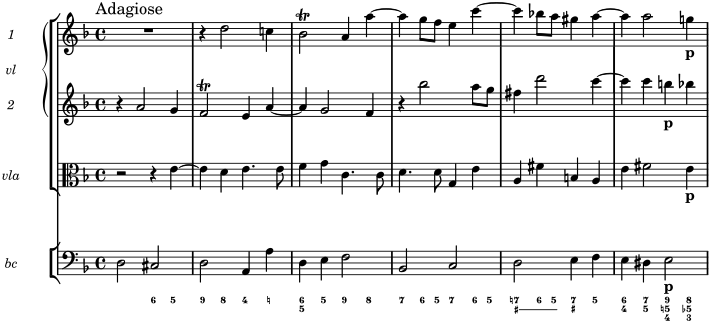 |
| 2 |  |
| 3 | 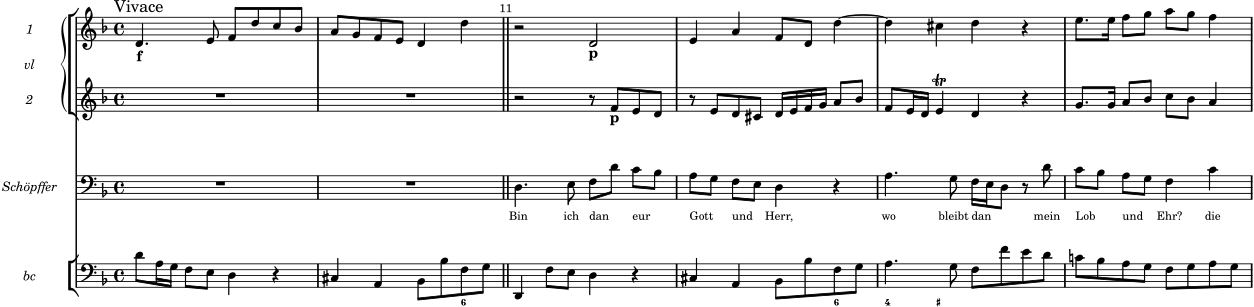 |
| 4 |  |
| 5 | 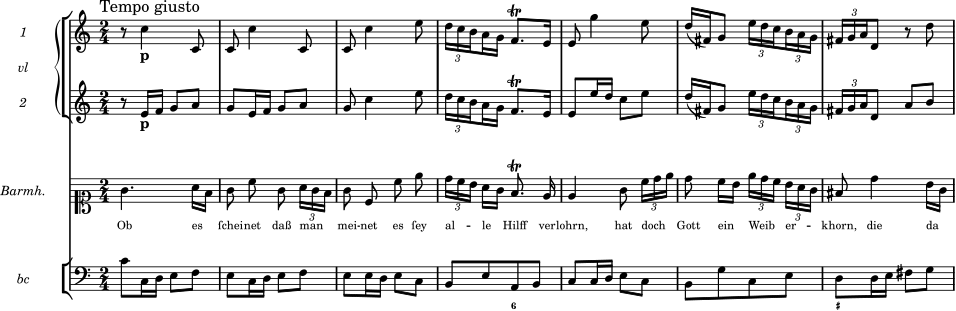 |
| 6 |  |
| 7 | 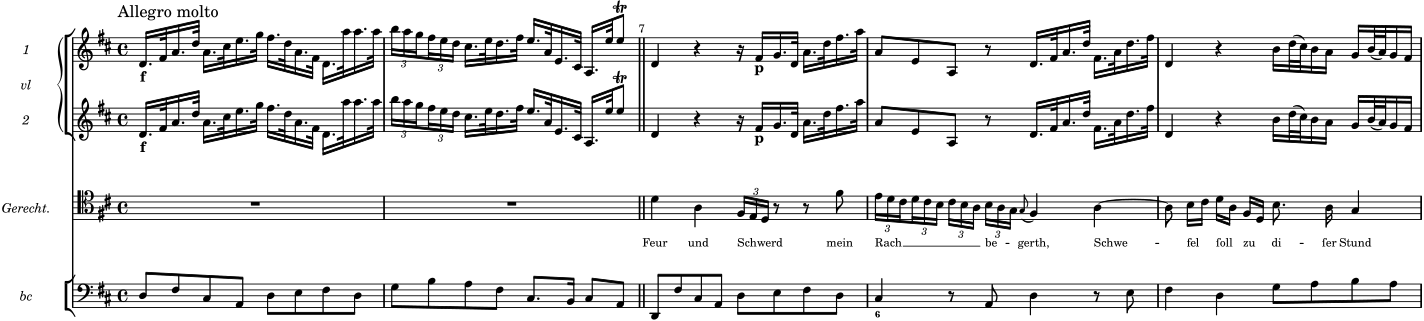 |
| 8 |  |
| 9 | 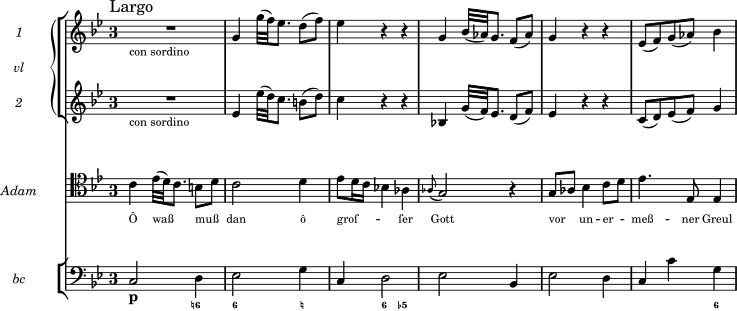 |
| 10 |  |
| 11 | 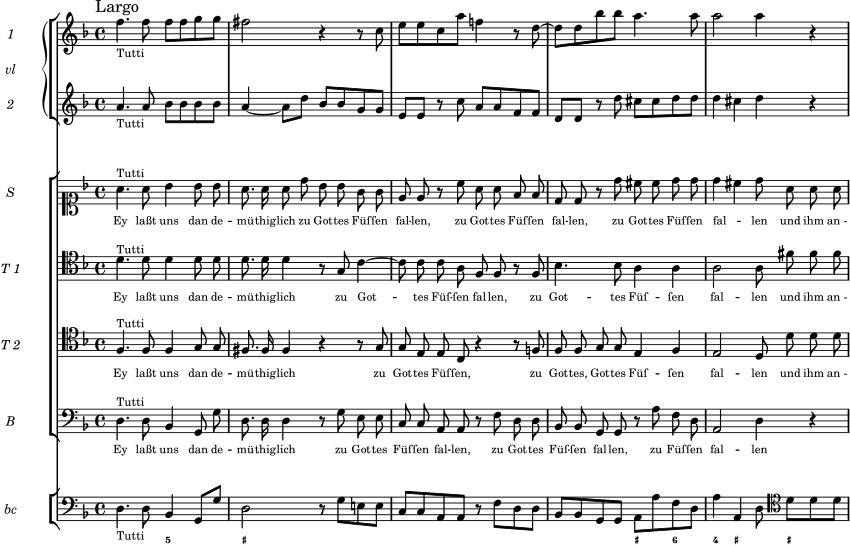 |
| 12 |  |
| 13 | 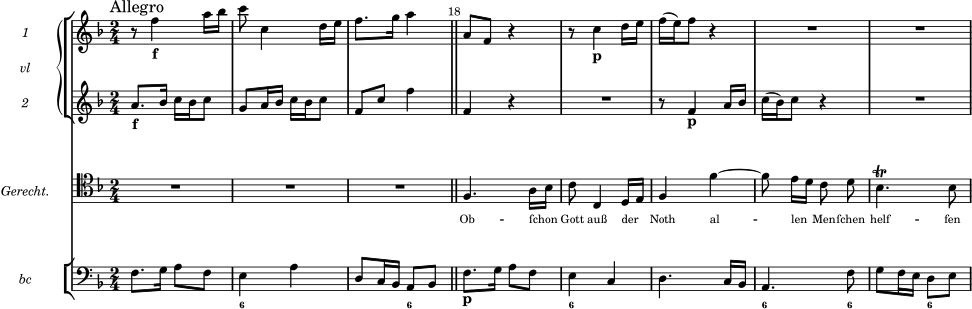 |
| 14 |  |
| 15 | 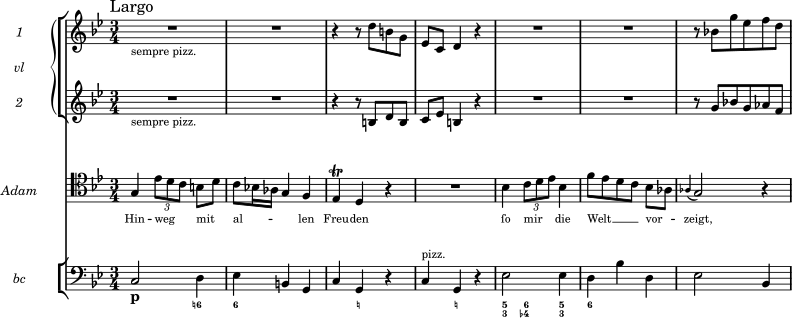 |
| 16 | 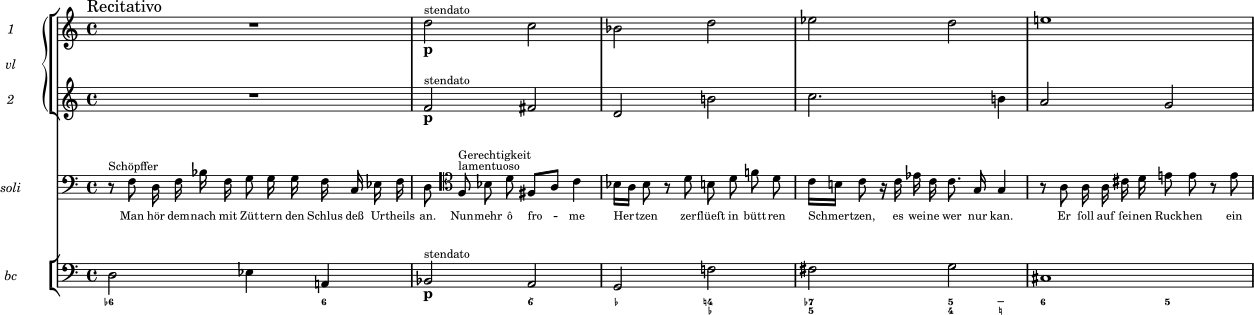 |
| 17 | 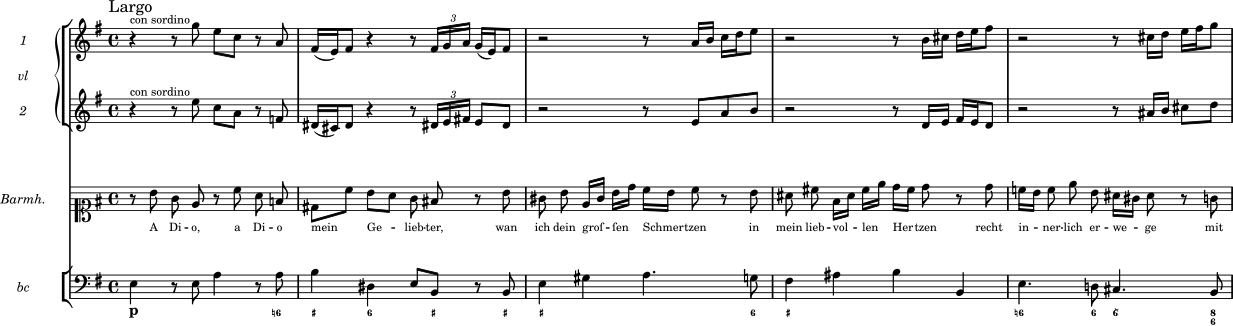 |
| 18 |  |
| 19 | 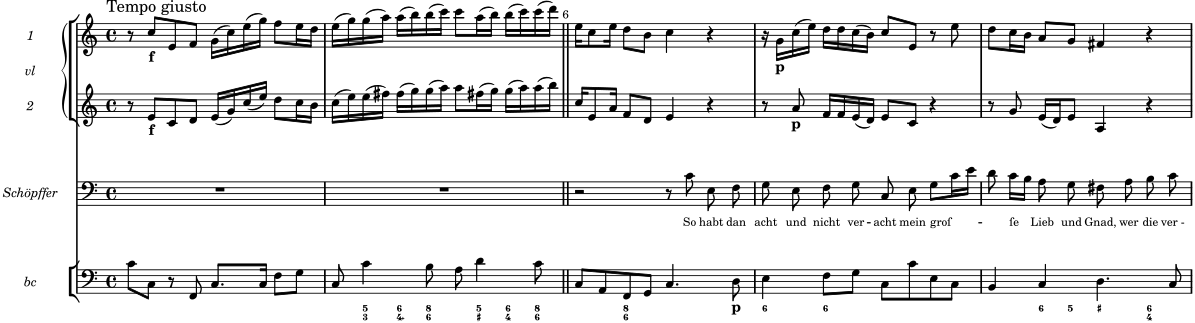 |
| 20 |  |
| 21 | 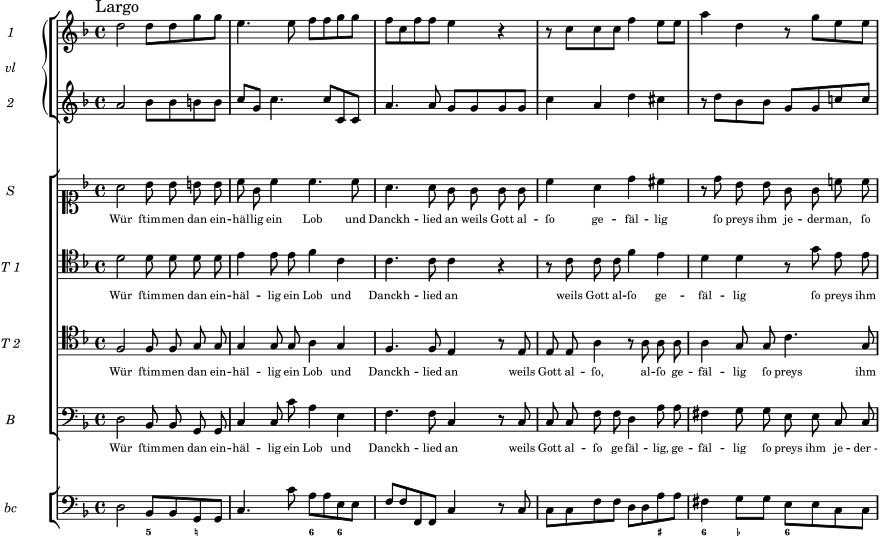 |
| Sources | C | H-Bn Ms.mus III.8 |
| P | A-KN D-I-614a-29 |
NoteDetails
- Identification
-
WerW A.13
HarBu 1.8
HarCa I.A.13 - ARKs
-
ark:68748/gw1a13 (human-readable catalogue entry)
ark:68748/gw1a13.mei (metadata in MEI format)
ark:68748/gw1a13.score (full score) - Scoring
- soli (S, 2 T, B), coro (S, 2 T, B), 2 vl, vla, bc
- Roles
- Die Barmherzigkeit (S), Die Gerechtigkeit (T), Der beklagte Adam (T), Der Schöpffer aller Dingen (B)
- Genre
- oratorio
- Place and date of composition
- Eisenstadt (?), 1749
- Performance(s)
- Eisenstadt (1): 1749-04-04
- References
- Farkas (1994), Hárich (1959, p. 19), Hárich (1976), Schindler (1967/69, p. 187, no. 5), Somfai (1963-1964), Tank (1981, p. 307)
- Inventories
- Sauer (1809, fol. 13v, no. 523)
- Editions
-
- Notes
- The introduction has been published by Joseph Haydn as 5th fugue in the collection VI Fugen in Quartetten WerW M.24. Movements 2–11 and 12–21 are entitled Actus primus (only in the textbook) and Actus secundus (textbook) / Pars secunda (score), respectively. A textbook in the former libretto collection of Esterházy have presumably been lost during the second world war.
Music
1 Introductio Oratoria
| Tempo | Adagiose |
| Key | D minor |
| Meter | |
| Extent | 62 bars |
| Scoring | 2 vl, vla, bc |
2 Scena prima
| Tempo | Recitativo |
| Key | C major |
| Meter | |
| Extent | 24 bars |
| Scoring | solo (B), bc |
| Roles | Der Schöpffer aller Dingen (B) |
| Text incipit | So wird dan meine Lieb und Treu |
3 Aria prima
| Tempo | Vivace |
| Key | D minor |
| Meter | |
| Extent | 118 bars (incl. 41 bars da capo) |
| Scoring | solo (B), 2 vl, bc |
| Roles | Der Schöpffer aller Dingen (B) |
| Text incipit | Bin ich dan eur Gott und Herr |
| Notes | penultimate bar: Adagio |
4 Scena secunda
| Tempo | Recitativo |
| Key | C major |
| Meter | |
| Extent | 25 bars |
| Scoring | soli (S, 2 T), bc |
| Roles | Die Barmherzigkeit (S), Die Gerechtigkeit (T), Der beklagte Adam (T) |
| Text incipit | Ô mich boßhafften Menſchen! |
5 Aria secunda
| Tempo | Tempo giusto |
| Key | C major |
| Meter | |
| Extent | 118 bars (incl. 44 bars da capo) |
| Scoring | solo (S), 2 vl, bc |
| Roles | Die Barmherzigkeit (S) |
| Text incipit | Ob es ſcheinet daß man meinet |
6 Scena tertia
| Tempo | Recitativo |
| Key | C major |
| Meter | |
| Extent | 51 bars |
| Scoring | soli (S, T, B), bc |
| Roles | Die Barmherzigkeit (S), Die Gerechtigkeit (T), Der Schöpffer aller Dingen (B) |
| Text incipit | Nun iſt es ſchon beſchloßen |
7 Aria tertia
| Tempo | Allegro molto |
| Key | D major |
| Meter | |
| Extent | 62 bars (incl. 24 bars da capo) |
| Scoring | solo (T), 2 vl, bc |
| Roles | Die Gerechtigkeit (T) |
| Text incipit | Feur und Schwerd mein Rach begerth |
8 Scena quarta
| Tempo | Recitativo |
| Key | C major |
| Meter | |
| Extent | 52 bars |
| Scoring | soli (S, 2 T, B), 2 vl, bc |
| Roles | Die Barmherzigkeit (S), Die Gerechtigkeit (T), Der beklagte Adam (T), Der Schöpffer aller Dingen (B) |
| Text incipit | Ach! ſo muß ich dan ſterben? |
9 Aria quarta
| Tempo | Largo |
| Key | C dorian |
| Meter | |
| Extent | 1 bars (incl. 1 bars da capo) |
| Scoring | solo (T), 2 vl, bc |
| Roles | Der beklagte Adam (T) |
| Text incipit | Ô waß muß dan ô großer Gott |
10 Scena quinta
| Tempo | Recitativo |
| Key | C major |
| Meter | |
| Extent | 68 bars |
| Scoring | soli (S, 2 T, B), 2 vl, bc |
| Roles | Die Barmherzigkeit (S), Die Gerechtigkeit (T), Der beklagte Adam (T), Der Schöpffer aller Dingen (B) |
| Text incipit | Wollan! der Streut muß nun ſein End gewinnen |
11 Chorus deren Engeln
| Tempo | Largo – Presto moderato |
| Key | D minor |
| Meter | |
| Extent | 43 bars |
| Scoring | coro (S, 2 T, B), 2 vl, bc |
| Text incipit | Ey laßt uns dan demüthiglich |
12 Scena sexta
| Tempo | Recitativo |
| Key | C major |
| Meter | |
| Extent | 14 bars |
| Scoring | soli (S, 2 T, B), bc |
| Roles | Die Barmherzigkeit (S), Die Gerechtigkeit (T), Der beklagte Adam (T), Der Schöpffer aller Dingen (B) |
| Text incipit | Damit dan alle Weld vernehme und erfahre |
13 Aria quinta
| Tempo | Allegro |
| Key | F major |
| Meter | |
| Extent | 227 bars (incl. 93 bars da capo) |
| Scoring | solo (T), 2 vl, bc |
| Roles | Die Gerechtigkeit (T) |
| Text incipit | Obſchon Gott auß der Noth |
14 Scena septima
| Tempo | Recitativo |
| Key | C major |
| Meter | |
| Extent | 36 bars |
| Scoring | soli (S, 2 T, B), 2 vl, bc |
| Roles | Die Barmherzigkeit (S), Die Gerechtigkeit (T), Der beklagte Adam (T), Der Schöpffer aller Dingen (B) |
| Text incipit | Weil dan mein eingebohrner Sohn |
15 Aria sexta
| Tempo | Largo |
| Key | C dorian |
| Meter | |
| Extent | 97 bars (incl. 39 bars da capo) |
| Scoring | solo (T), 2 vl, bc |
| Roles | Der beklagte Adam (T) |
| Text incipit | Hinweg mit allen Freuden |
| Notes | last two bars of middle section: Adagio |
16 Scena octava
| Tempo | Recitativo |
| Key | C major |
| Meter | |
| Extent | 26 bars |
| Scoring | soli (S, T, B), 2 vl, bc |
| Roles | Die Barmherzigkeit (S), Die Gerechtigkeit (T), Der Schöpffer aller Dingen (B) |
| Text incipit | Man hör demnach mit Züttern |
17 Aria septima
| Tempo | Largo – Allegretto |
| Key | E minor |
| Meter | |
| Extent | 74 bars |
| Scoring | solo (S), 2 vl, bc |
| Roles | Die Barmherzigkeit (S) |
| Text incipit | A Dio mein Geliebter |
| Notes | bars 22–74 (Allegretto) in G major and 2/4 time |
18 Scena nona
| Tempo | Recitativo |
| Key | C major |
| Meter | |
| Extent | 23 bars |
| Scoring | soli (S, 2 T, B), bc |
| Roles | Die Barmherzigkeit (S), Die Gerechtigkeit (T), Der beklagte Adam (T), Der Schöpffer aller Dingen (B) |
| Text incipit | Gedenckhe dan ô Menſch |
19 Aria octava
| Tempo | Tempo giusto |
| Key | C major |
| Meter | |
| Extent | 65 bars (incl. 25 bars da capo) |
| Scoring | solo (B), 2 vl, bc |
| Roles | Der Schöpffer aller Dingen (B) |
| Text incipit | So habt dan acht und nicht veracht |
20 Scena decima
| Tempo | Recitativo |
| Key | C major |
| Meter | |
| Extent | 8 bars |
| Scoring | soli (S, 2 T), bc |
| Roles | Die Gerechtigkeit (T), Der beklagte Adam (T), Der Schöpffer aller Dingen (B) |
| Text incipit | Ô großer Gott dir danckhe ich |
21 Chorus deren Engeln
| Tempo | Largo – Allegro |
| Key | D minor |
| Meter | |
| Extent | 39 bars |
| Scoring | coro (S, 2 T, B), 2 vl, bc |
| Text incipit | Wür ſtimmen dan einhällig |
Sources
Manuscript copy
Classification
notated music · manuscript · copy · score · fair copy · complete
Location(s)
H-Bn Ms.mus III.8 (digitized version, catalogue entry)
RISM
Publication, dating
1749-06-09
Scribe(s)
Johann Georg Thonner (brown ink)
Title page(s)
[fol. 1r]Adam.
Physical description
34 fol.
33 × 21 cm
hand-ruled paper, 14–16 staves (10 mm)
Components and notes
- score consists of title page (fol. 1r), empty page (fol. 1v), music (fol. 2r–33v), and empty pages (fol. 34r–v)
Classification
text · print · copy · libretto · first edition · complete
Location(s)
A-KN D-I-614a-29
RISM
–
Publication, dating
Samuel Müller, [Wiener] Neustadt, 1749 (no plate number)
Scribe(s)
–
Title page(s)
[fol. 1r]ORATORIUM. | Die wegen dem Fall | Adams | zu dem zeitlich- als ewigen Untergang trach- | tend höchſt-erzörnte | Gerechtigkeit. | Doch endlich auch glücklich beſieget von der auf all | erſinnliche Hilffs-Mittel bedachten | Barmherzigkeit. | In einer | Muſicaliſchen Traur-Scen verfaſſet / und ab- | geſungen von einer Hochfürſtl. Eſtorhaſiſchen Hof- | Capellen in allhieſig-Herrſchaftlicher Spital-Kirchen bey | dem Heil. Grab zu Eyſenſtadt den 4. April | Anno 1749. | Durch Gregorium Joſephum Werner, Seiner Hoch- | fürſtl. Durchl. dermahligen Capell-Meiſtern. | Neuſtadt / gedruckt bey Samuel Müller, Wienn. Univ. Buchdr.
Physical description
10 fol.
Components and notes
- fol. 1r: title; 1v: list of roles; 2r–10v: text
A.14
David

| Identifiers | HarBu 1.9 · HarCa I.A.14 |
| ARK | ark:68748/gw1a14 |
| Sources | H-Bn Ms.mus III.9 · A-Wst A-14984 |
| Notes | |
| References | Farkas (1994), Hárich (1976), Schlader (2019), Schlader (2020), Tank (1981, p. 307f) |
| Inventories | Sauer (1809, fol. 13v, no. 527) |
| Editions | Vécsey (1968b, pp. 37–50) |
A.15
Daniel

| Identifiers | HarBu 1.10 · HarCa I.A.15 |
| ARK | ark:68748/gw1a15 |
| Sources | H-Bn Ms.mus III.10 |
| Notes | |
| References | Farkas (1994), Hárich (1976), Schlader (2019), Schlader (2020), Tank (1981, p. 308) |
| Inventories | Sauer (1809, fol. 13v, no. 520) |
| Editions | Vécsey (1968a, pp. 22–33) |
A.16
Johann von Nepomuk
(no incipit available)
| Identifiers | HarCa I.A.16 |
| ARK | ark:68748/gw1a16 |
| Sources | A-Wgm III 17704 (H 28238) |
| Notes | |
| References | Farkas (1994), Hárich (1976), Tank (1981, p. 308), Warner (1965) |
| Inventories | |
| Editions |
A.17
Tobias
(no incipit available)
| Identifiers | HarCa I.A.17 |
| ARK | ark:68748/gw1a17 |
| Sources | A-Wgm III 17707 (H 28241) |
| Notes | |
| References | Farkas (1994), Hárich (1976), Tank (1981, p. 308), Warner (1965) |
| Inventories | |
| Editions |
A.18
Antiochus

| Identifiers | HarBu 1.11 · HarCa I.A.19 |
| ARK | ark:68748/gw1a18 |
| Sources | H-Bn Ms.mus III.11 · H-Bn (no shelfmark) |
| Notes | textbook in H-Bn currently (2025-04) undiscoverable |
| References | Farkas (1994), Hárich (1959, p. 19), Hárich (1976), Tank (1981, p. 309f) |
| Inventories | Sauer (1809, fol. 13v, no. 526) |
| Editions | Vécsey (1968b, pp. 11–22) |
A.19
Debora
Debora, ein WeIb Von Gott erkIeſt, alß StIze SeIner FreVnDen; IaheL, eIn WeIb, ſo Gott erWähLet zVr GeIſeL SeIner FeInDen. Erwießen durch den untergang des König Jabins Feld Haubtmann Sisera
| 1 | 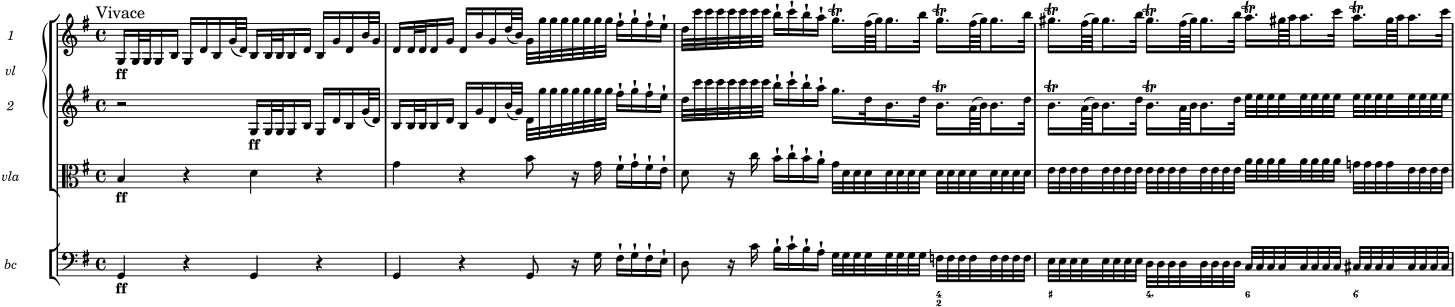 |
| 2 | 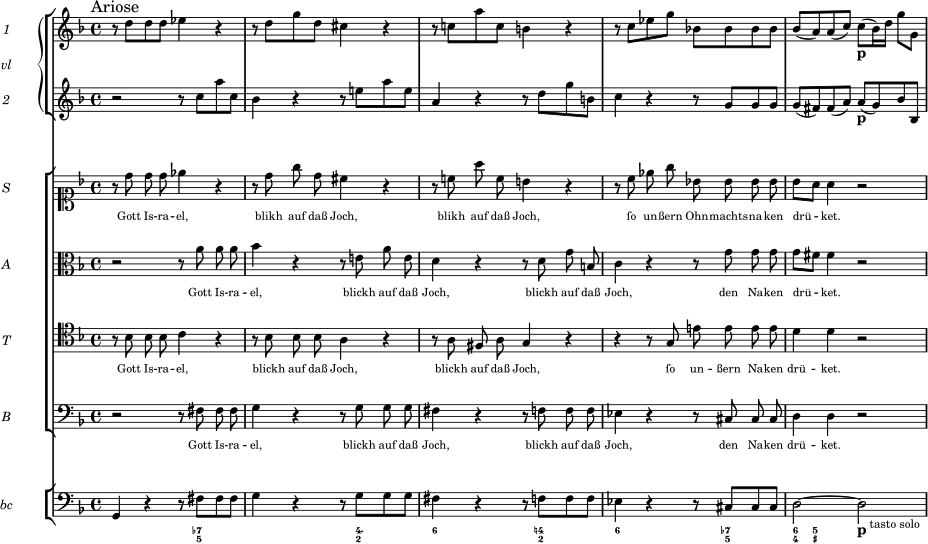 |
| 3 |  |
| 4 | 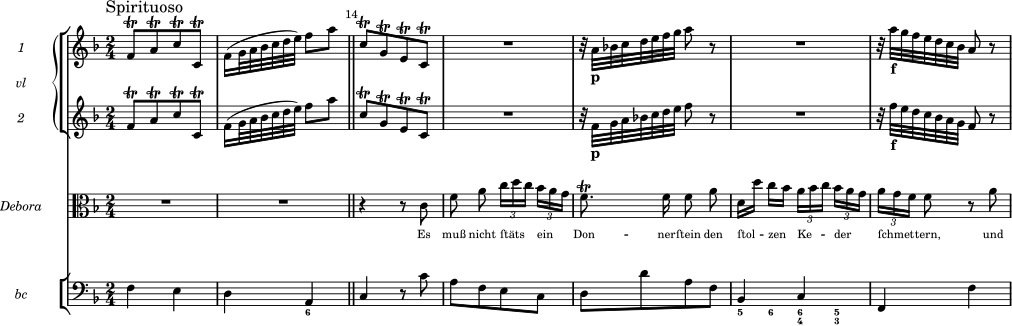 |
| 5 |  |
| 6 | 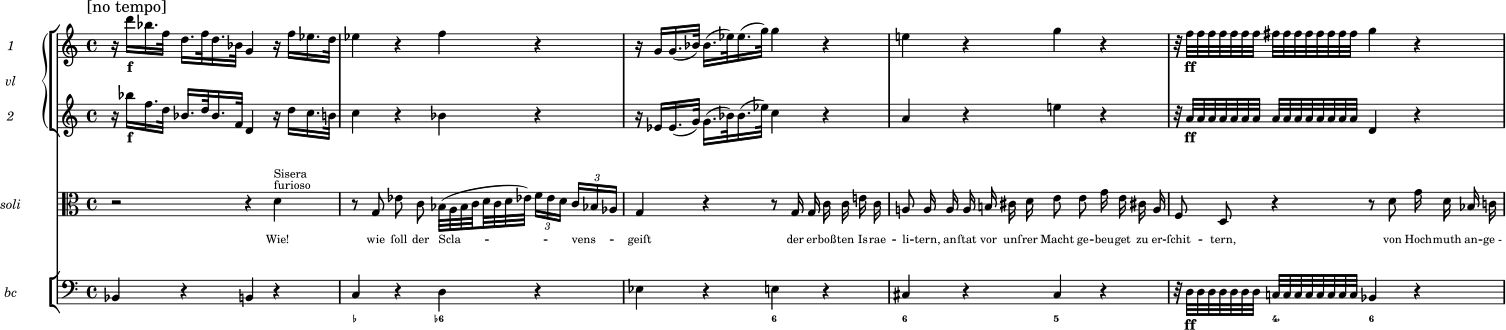 |
| 7 | 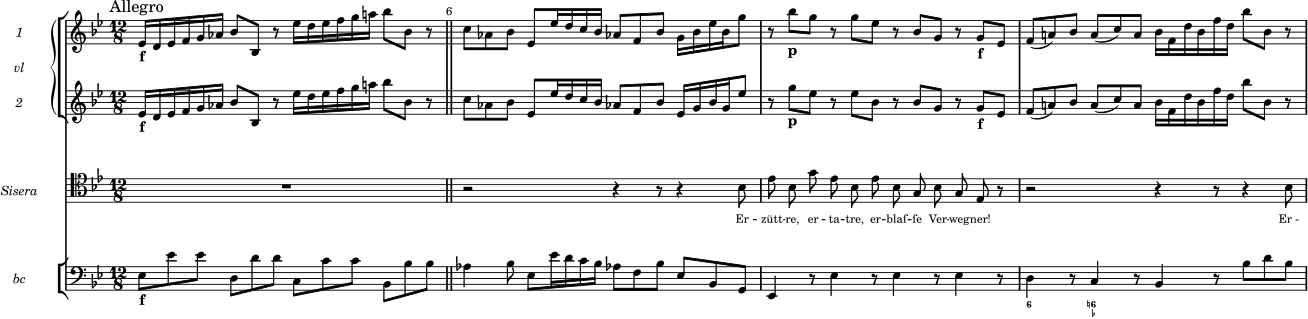 |
| 8 | 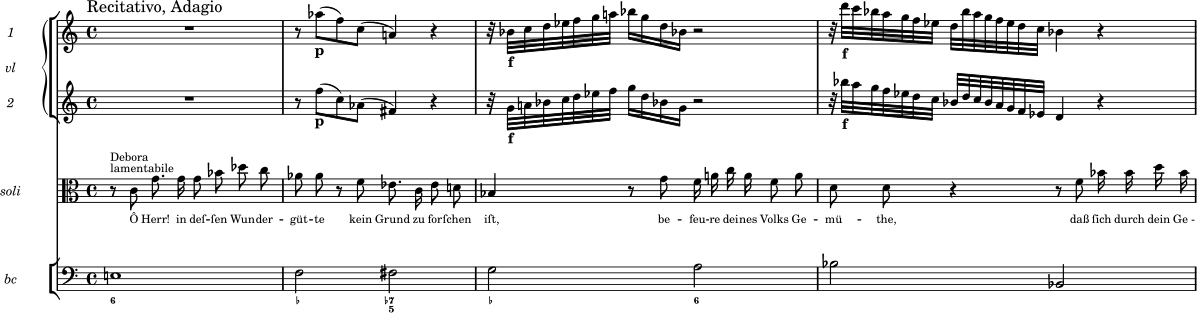 |
| 9 | 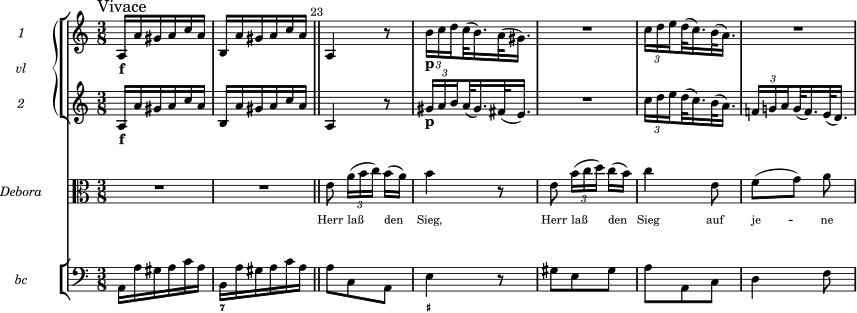 |
| 10 |  |
| 11 | 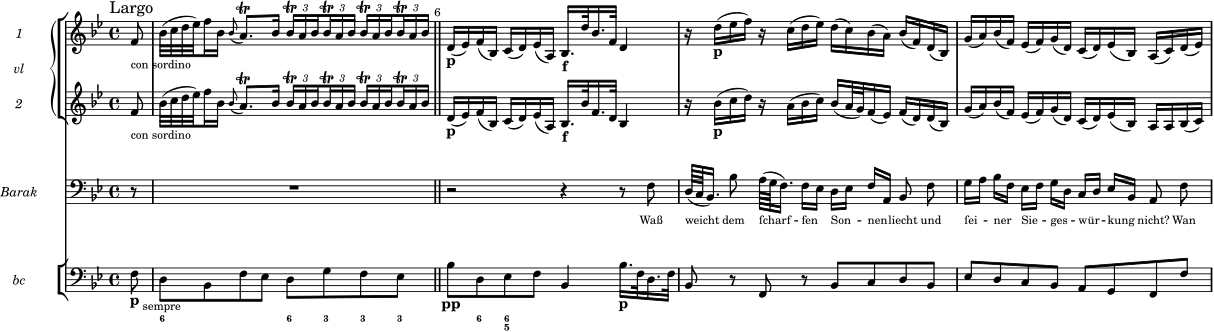 |
| 12 |  |
| 13 | 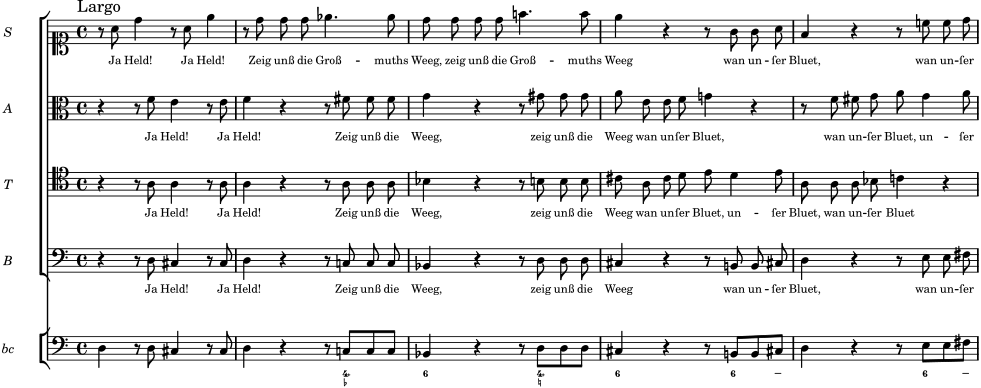 |
| 14 | 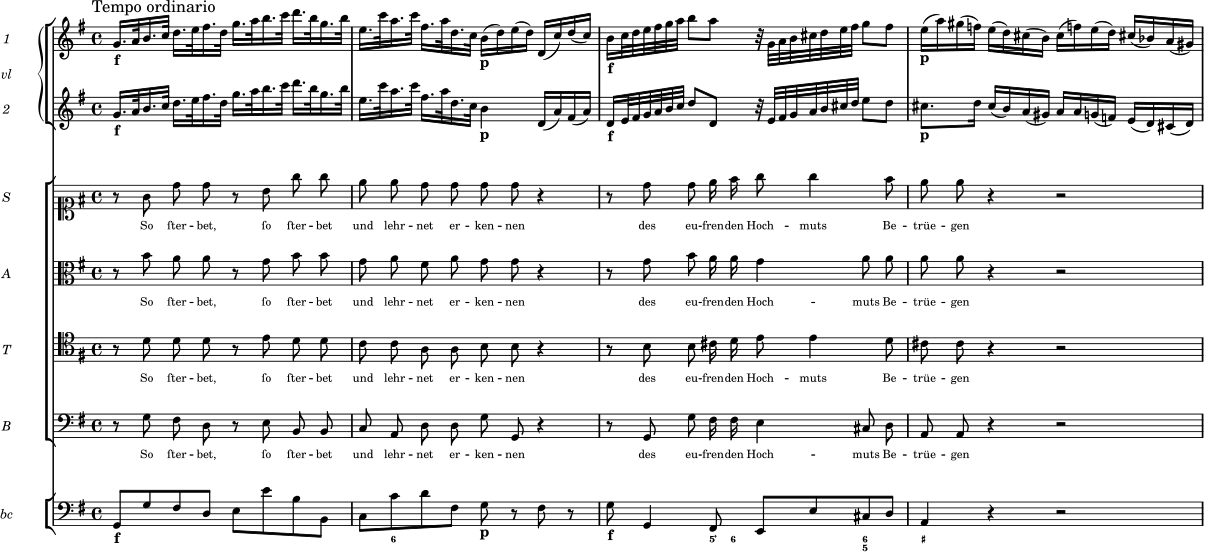 |
| 15 |  |
| 16 | 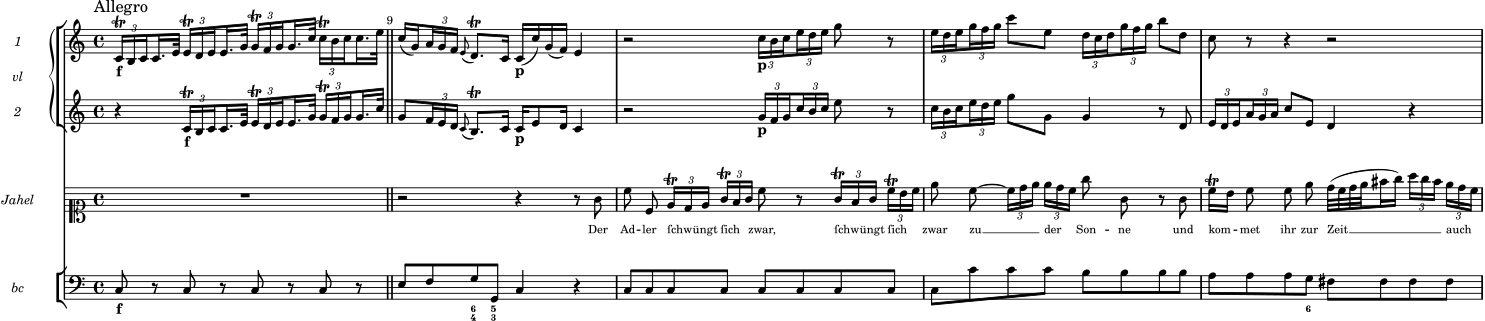 |
| 17 |  |
| 18 | 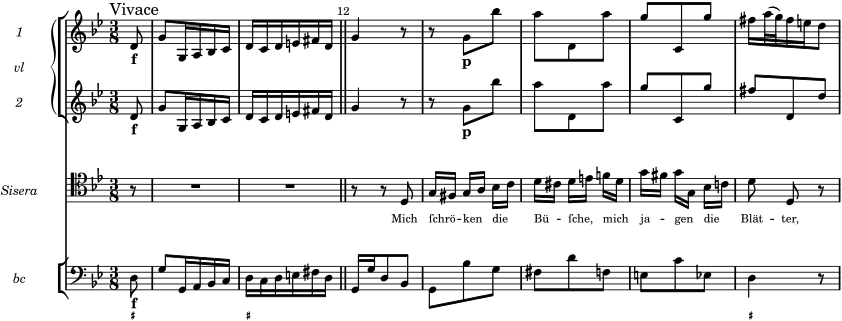 |
| 19 |  |
| 20 | 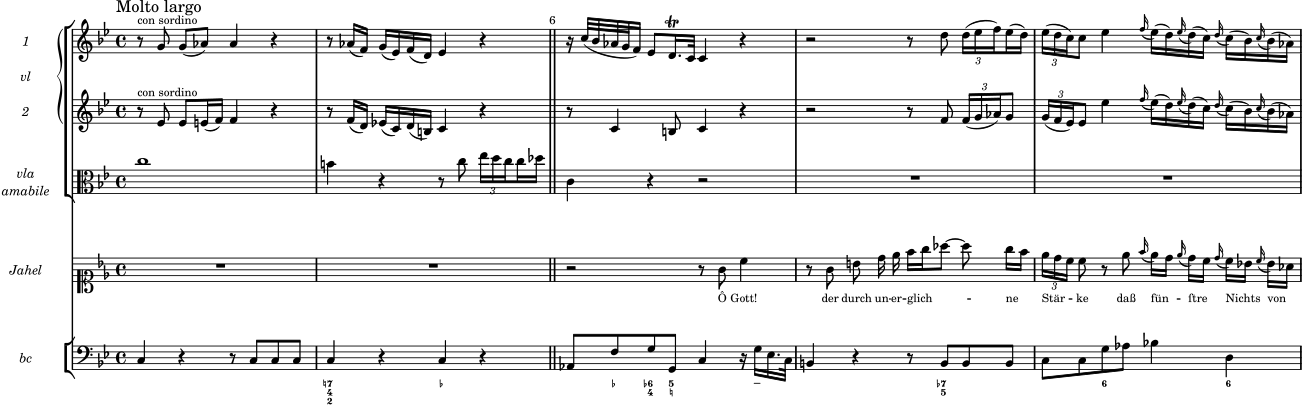 |
| 21 | 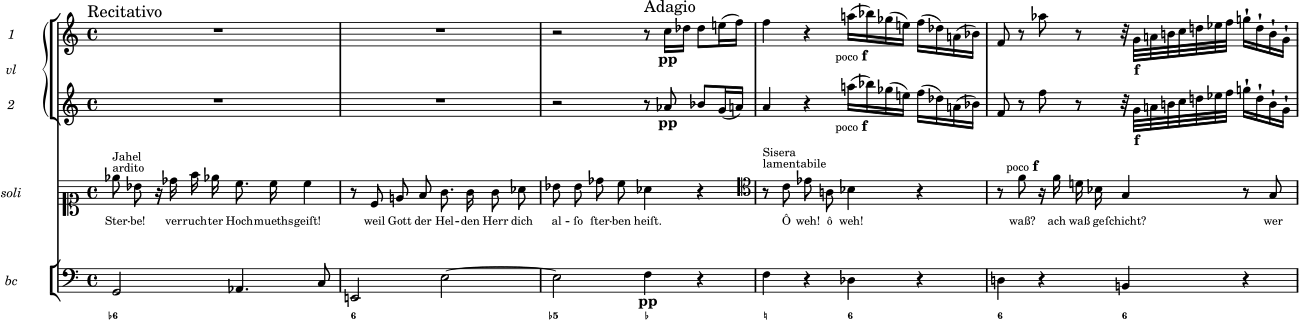 |
| 22 | 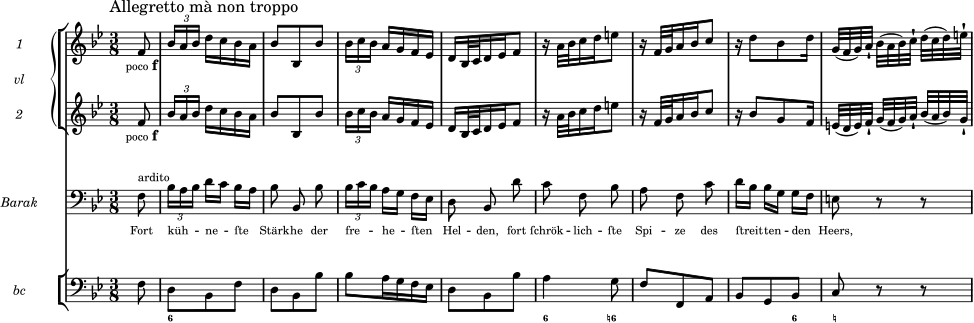 |
| 23 |  |
| 24 | 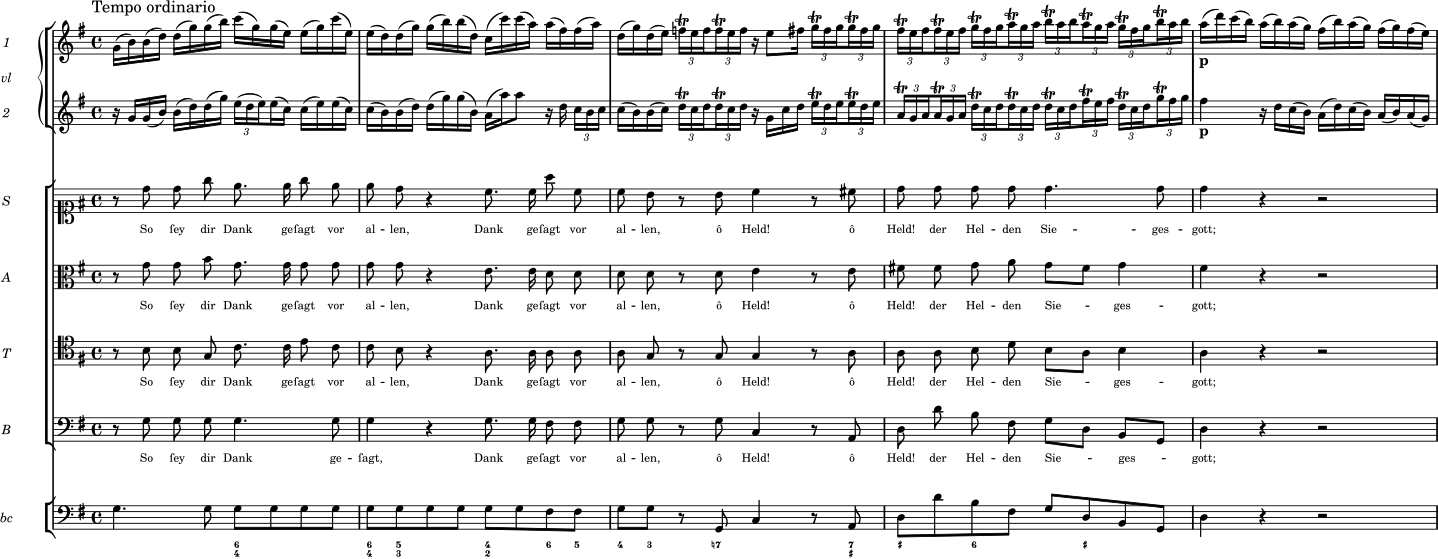 |
| Sources | A | H-Bn Ms.mus III.12 |
| C | A-Wgm III 17703 (H 28237) |
NoteDetails
- Identification
-
WerW A.19
HarBu 1.12
HarCa I.A.20 - ARKs
-
ark:68748/gw1a19 (human-readable catalogue entry)
ark:68748/gw1a19.mei (metadata in MEI format)
ark:68748/gw1a19.score (full score) - Scoring
- soli (S, A, T, B), coro (S, A, T, B), 2 vl, vla, bc
- Roles
- Jahel (S), Debora (A), Sisera (T), Barak (B)
- Genre
- oratorio
- Place and date of composition
- Eisenstadt (?), 1760
- Performance(s)
- Eisenstadt, Schlosskapelle (1): 1760-04-04
- References
- Farkas (1994), Hárich (1976), Tank (1981, p. 309), Warner (1965)
- Inventories
- Sauer (1809, fol. 13v, no. 519)
- Editions
-
Vécsey (1968a, pp. 11–21),
- Notes
- Movements 2–14 and 15–24 are entitled Actus primus and Actus secundus, respectively.
Music
1 Introductio
| Tempo | Vivace |
| Key | G major |
| Meter | |
| Extent | 53 bars |
| Scoring | 2 vl, vla, bc |
| Section | Tempo | Key | Meter | Extent | Scoring | Notes |
|---|---|---|---|---|---|---|
| [no title] | Vivace | G major | |
17 | 2 vl, vla, bc | |
| [no title] | Molto allegro | G major | |
36 | 2 vl, vla, bc |
2 Scena prima
| Tempo | Adagiose |
| Key | G dorian |
| Meter | |
| Extent | 23 bars |
| Scoring | coro (S, A, T, B), 2 vl, bc |
3 Scena secunda
| Tempo | Recitativo |
| Key | C major |
| Meter | |
| Extent | 57 bars |
| Scoring | soli (A, B), bc |
| Roles | Debora (A), Barak (B) |
4 Aria prima
| Tempo | Spirituoso |
| Key | F major |
| Meter | |
| Extent | 195 bars (incl. 84 bars da capo) |
| Scoring | solo (A), 2 vl, bc |
| Roles | Debora (A) |
| Notes | middle section: Andante, D minor, 3/8, 27 bars |
5 Scena tertia
| Tempo | Recitativo |
| Key | C major |
| Meter | |
| Extent | 32 bars |
| Scoring | solo (B), bc |
| Roles | Barak (B) |
6 Scena quarta
| Tempo | [Recitativo] |
| Key | C major |
| Meter | |
| Extent | 28 bars |
| Scoring | solo (T), 2 vl, bc |
| Roles | Sisera (T) |
7 Aria secunda
| Tempo | Allegro |
| Key | E♭ lydian |
| Meter | |
| Extent | 77 bars (incl. 31 bars da capo) |
| Scoring | solo (T), 2 vl, bc |
| Roles | Sisera (T) |
| Notes | middle section: Andante, C dorian, common time, 15 bars |
8 Scena quinta
| Tempo | Recitativo, Adagio |
| Key | C major |
| Meter | |
| Extent | 18 bars |
| Scoring | solo (A), 2 vl, bc |
| Roles | Debora (A) |
9 Aria tertia
| Tempo | Vivace |
| Key | A minor |
| Meter |  |
| Extent | 210 bars (incl. 96 bars da capo) |
| Scoring | solo (A), 2 vl, bc |
| Roles | Debora (A) |
| Notes | middle section: Allegretto, E phrygian, common time, 18 bars |
10 Scena sexta
| Tempo | Recitativo |
| Key | C major |
| Meter | |
| Extent | 43 bars |
| Scoring | soli (A, B), 2 vl, bc |
| Roles | Debora (A), Barak (B) |
11 Aria quarta
| Tempo | Largo |
| Key | B♭ major |
| Meter | |
| Extent | 97 bars (incl. 22 bars da capo) |
| Scoring | solo (B), 2 vl, bc |
| Roles | Barak (B) |
| Notes | middle section: Andante, G minor, 3/8, 53 bars, with two last bars in common time (Adagio) |
12 Scena septima
| Tempo | Recitativo |
| Key | C major |
| Meter | |
| Extent | 40 bars |
| Scoring | soli (A, T, B), 2 vl, bc |
| Roles | Debora (A), Sisera (T), Barak (B) |
13 Chorus
| Tempo | Largo – Recitativo |
| Key | D dorian |
| Meter | |
| Extent | 44 bars |
| Scoring | soli (T, B), coro (S, A, T, B), 2 vl, bc |
| Roles | Sisera (T), Barak (B) |
14 Chorus
| Tempo | Tempo ordinario |
| Key | G major |
| Meter | |
| Extent | 11 bars |
| Scoring | coro (S, A, T, B), 2 vl, bc |
15 Scena prima
| Tempo | Recitativo |
| Key | C major |
| Meter | |
| Extent | 15 bars |
| Scoring | solo (S), bc |
| Roles | Jahel (S) |
16 Aria prima
| Tempo | Allegro |
| Key | C major |
| Meter | |
| Extent | 125 bars (incl. 45 bars da capo) |
| Scoring | solo (S), 2 vl, bc |
| Roles | Jahel (S) |
| Notes | middle section: Andante, F major, 3/8, 35 bars |
17 Scena secunda
| Tempo | Recitativo |
| Key | C major |
| Meter | |
| Extent | 32 bars |
| Scoring | soli (S, T), bc |
| Roles | Jahel (S), Sisera (T) |
18 Aria secunda
| Tempo | Vivace |
| Key | G minor |
| Meter | |
| Extent | 184 bars (incl. 79 bars da capo) |
| Scoring | solo (T), 2 vl, bc |
| Roles | Sisera (T) |
| Notes | middle section: Larghetto, D phrygian, 2/4, 26 bars |
19 [Scena tertia]
| Tempo | Recitativo – Largo – Recitativo |
| Key | C major |
| Meter | |
| Extent | 69 bars |
| Scoring | soli (S, T), 2 vl, bc |
| Roles | Jahel (S), Sisera (T) |
20 Aria tertia
| Tempo | Molto largo |
| Key | C dorian |
| Meter | |
| Extent | 96 bars (incl. 33 bars da capo) |
| Scoring | solo (S), 2 vl, vla, bc |
| Roles | Jahel (S) |
| Notes | middle section: Allegretto, E♭ lydian, 2/4, 30 bars, with two final bars Adagio; vla amabile |
21 [Scena quarta]
| Tempo | Recitativo – Adagio – [Recitativo] |
| Key | C major |
| Meter | |
| Extent | 46 bars |
| Scoring | soli (S, T, B), 2 vl, bc |
| Roles | Jahel (S), Sisera (T), Barak (B) |
22 Aria quarta
| Tempo | Allegretto mà non troppo |
| Key | B♭ major |
| Meter | |
| Extent | 101 bars |
| Scoring | solo (B), 2 vl, bc |
| Roles | Barak (B) |
| Notes | second section: Vivace, 2/4, 47 bars; no da capo |
23 [Scena quinta]
| Tempo | Recitativo |
| Key | C major |
| Meter | |
| Extent | 27 bars |
| Scoring | soli (S, B), bc |
| Roles | Jahel (S), Barak (B) |
24 Chorus
| Tempo | Tempo ordinario – Allegro |
| Key | G major |
| Meter | |
| Extent | 55 bars |
| Scoring | coro (S, A, T, B), 2 vl, bc |
Sources
Autograph manuscript
Classification
notated music · manuscript · autograph · score · fair copy · complete
Location(s)
H-Bn Ms.mus III.12 (digitized version, catalogue entry)
RISM
Publication, dating
1760
Scribe(s)
Gregor Joseph Werner (brown ink)
Title page(s)
[first fascicle, fol. 1r]Debora | EIn WeIb Von Gott erkIeſt | alß StIze SeIner FreVnDen; | IaheL | EIn WeIb, ſo Gott erWähLet | zVr GeIſeL SeIner FeInDen | Erwießen | durch den untergang des König Jabins | Feld Haubtmann Sisera. | Oratorischer weiße Vorgetragen | Und abgeſungen in Hochfürstl:r | Schloß Capelln Bey dem Heyl: | grab zu Eißenstadt | den 4 April Anno 1760. | Durch Antonium Tauffer Hochfürstl:n | Kanceliſten in die reimen verfaßet | Und | durch Gregorium Werner Hochfürstl: | Capellmeiſtern in die Music verſezt.
Unterredende Perſonen. | Jahel, die beherzte Heldin. Canto. | Debora, Eine mit Prophetiſchen Geiſt | begaabte Richterin in Israel. Alto. | Sisera, der Feldfürſt des Cananiter | Königs Jabin. Tenore. | Barack, der Israelitiſchen Feld- | Obriſter. Baſso. | Chorus. | der ſtreitenden Israelitern.
Deboræ, Baraks, Sisaræ [sic!] u Jahels | Zweyter Theil. | pro Anno 1760. | Auth:re Werner.
Physical description
2 fascicles (52 and 36 fol.)
36 × 23 cm
hand-ruled paper, 11–14 staves (11 mm)
Components and notes
- chronogram: 500 (D) + 18 (IVVIVI) + 507 (IIVD) + 51 (IL) + 72 (IVVIVVL) + 558 (VILIID) = 1706
Manuscript copy
Classification
notated music · manuscript · copy · score · fair copy · complete
Location(s)
A-Wgm III 17703 (H 28237)
RISM
–
Publication, dating
1761-03-10
Scribe(s)
Johann Georg Thonner (black ink), Aloys Fuchs (black ink, title)
Title page(s)
[fol. 1r, by Fuchs]- 17703 | [by different hand in blue pencil: 1837 von A. Fuchs | eingetauscht] | Debbora und Jahel. | oder | Sisera’s Untergang. | Geiſtliches
Oratorium , bei dem heilg: | Grabe zu ſingen. | In Musik geſetzt von |Joseph Gregor Werner | fürſtl. Esterhaczyſcher | Kaplmſtr. | Aufgeführt in Eiſenſtadt am | 3. April 1760. | Partitura | (24 Bogen) | AF. [= Aloys Fuchs]
Physical description
52 fol.
35 × 22 cm
hand-ruled paper, 14 staves (10 mm)
Components and notes
- fol. 1v: empty; 2r–49r: music; 49v–52v: empty
- at end of work (fol. 49r): 10. Martii 761.
A.L1
Die drey Pilgräme
(no incipit available)
| Identifiers | HarCa I.A.18 |
| ARK | ark:68748/gw1al1 |
| Sources | |
| Notes | textbook formerly in H-Bn, now lost |
| References | Farkas (1994), Hárich (1959, p. 19), Hárich (1976), Tank (1981, p. 308f) |
| Inventories | |
| Editions |
A.L2
Oratorium primum
(no incipit available)
| Identifiers | HarCa I.A.21 |
| ARK | ark:68748/gw1al2 |
| Sources | |
| Notes | textbook formerly in H-Bn, now lost |
| References | Farkas (1994), Hárich (1976), Tank (1981, p. 218f) |
| Inventories | |
| Editions |
A.L3
Oratorium secundum
(no incipit available)
| Identifiers | HarCa I.A.22 |
| ARK | ark:68748/gw1al3 |
| Sources | |
| Notes | textbook formerly in H-Bn, now lost |
| References | Farkas (1994), Hárich (1976), Tank (1981, p. 218f) |
| Inventories | |
| Editions |
